Forbes Ukraine, 14.10.2026
After five years at Raiffeisen Bank, Larysa Bondarieva returned to Credit Agricole, where she had also worked previously, but this time as CEO. How is the bank preparing for winter, when could the Bank Lviv acquisition agreement be finalized, and what does Paris think about the growing war-related risks in Ukraine? Bondarieva’s first major interview in her new role.
During almost 16 years at Credit Agricole, Larysa Bondarieva, 52, went through crises and the pandemic, and later, at Raiffeisen Bank, experienced the first years of the full-scale war. On September 4, she returned to Credit Agricole in a new role, becoming the bank’s CEO.
Last year, Bondarieva was a candidate for the CEO position at Raiffeisen Bank, but the role went to Nataliia Hurina. “It did not change anything in my work,” Bondarieva says. “I continued managing a large business and a successful team, just as I had before.”
Instead, Credit Agricole offered her the position with an ambitious goal: to expand its presence in Ukraine during the war. Bondarieva took over the position from the French executive Carlos de Cordoue, who had headed the bank since April 2020 and had previously managed the French group’s Serbian subsidiary.
Credit Agricole is now expanding its presence in Ukraine. At the end of June, the Antimonopoly Committee of Ukraine approved the acquisition of Bank Lviv.
How does Credit Agricole plan to increase lending to farmers? How is the Bank Lviv agreement progressing, and why is it important? How does top management in Paris assess the risks to the bank’s operations amid the deteriorating security situation? And what does the new CEO want the bank to look like in 2031?
These topics are discussed in Larysa Bondarieva’s first major interview with Forbes Ukraine as CEO of Credit Agricole.The interview has been shortened and edited for clarity.
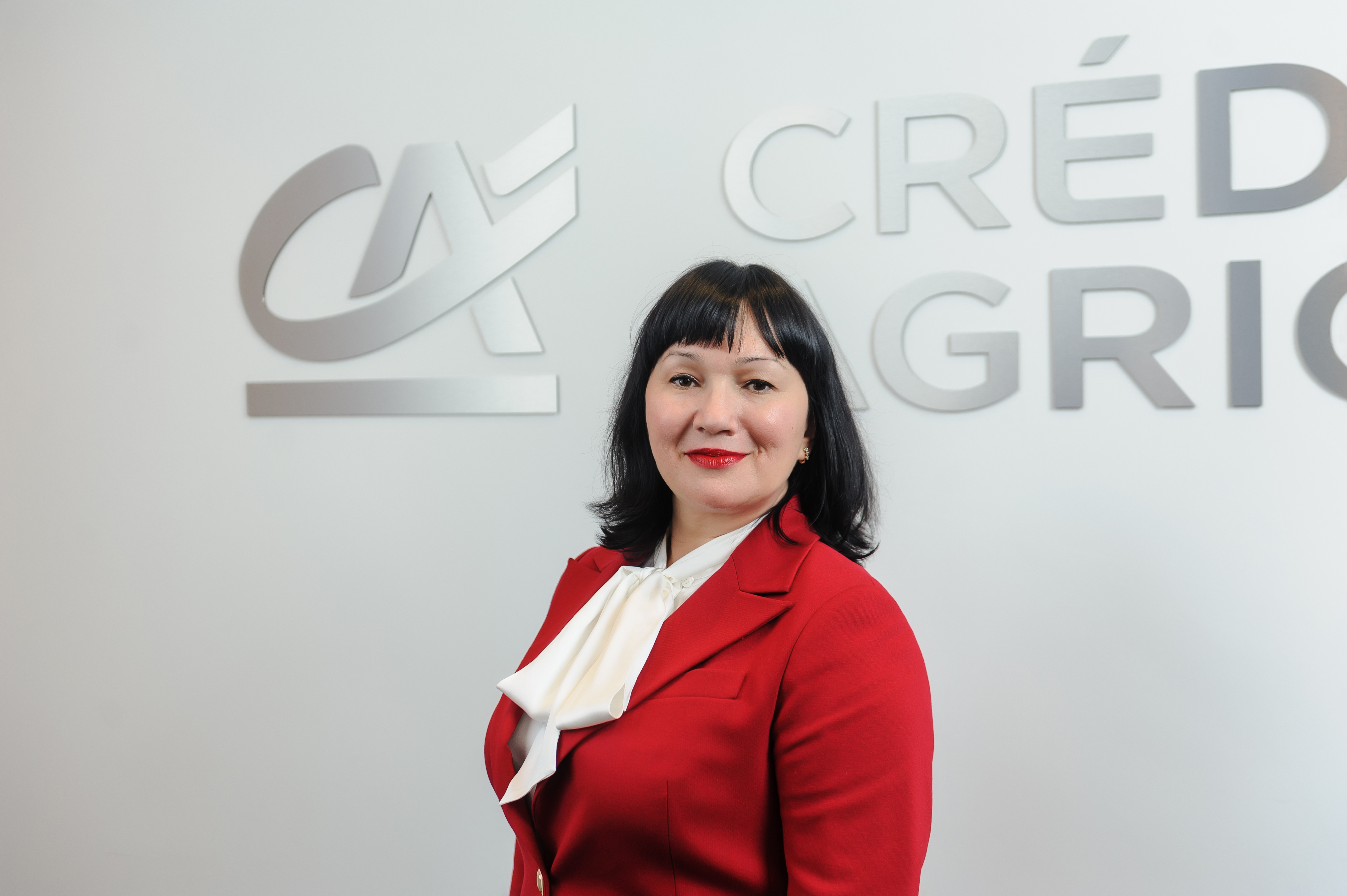 Larysa Bondarieva, CEO of Credit Agricole Bank
How Credit Agricole Chose Its CEO
Tell us about your appointment as CEO of Credit Agricole. Did you apply through a selection process, or were you offered the position?
I don’t know whether there was a formal selection process, but I assume there was. Representatives of the bank approached me to discuss whether I would be interested in the position. I have known this banking group for a long time, as I worked there for 15 years before joining Raiffeisen Bank.
I was also attracted by the fact that the bank has an ambitious goal — to expand its presence in Ukraine during the war. We then started a dialogue with the Group, and eventually I received an offer. I made the decision to accept it at the end of May. The negotiations had started several months earlier.
Is it true that you also took part in the selection process for the CEO position at Raiffeisen Bank last year?
Yes. I had been working there for the last five years. When Oleksandr Pysaruk decided to leave the Group, I was invited to take part in the selection process. At least three representatives of Raiffeisen Bank participated in it.
What was your motivation? Did you feel that it was time to move into a CEO role?
Of course. I was a Management Board member for almost 16 years. During those years at Credit Agricole, we went through various challenges — crises and COVID-19 — while at Raiffeisen we went through the first years of the full-scale war. So naturally, I developed a professional interest in taking the next step.
When Nataliia Hurina became CEO of Raiffeisen Bank at the beginning of the year, it did not change anything in my work. I continued managing a large business and a successful team, just as I had before.
You switched from being the Head of Corporate Banking to CEO. How difficult is such a transition, given the difference in scale?
The scope of responsibilities has indeed expanded significantly, but being a Management Board member already requires participation in discussions and decision-making across different areas, not only within your own business line. So it was not a stressful transition because the groundwork had already been laid.
Previously, more attention was paid to commercial activities and communication with sales teams and customers. As CEO of a bank during wartime, the focus is on ensuring business continuity and supporting the mental well-being of the team, given the extremely difficult circumstances.
At the end of June, Credit Agricole received approval from the Antimonopoly Committee of Ukraine for the acquisition of Bank Lviv. We are now at the final stage of discussions with the National Bank of Ukraine, and this will be one of my key priorities over the coming months.
What are your strategic priorities for the initial period?
The top priority is preparing for winter and addressing increasing risks. Ukrainian businesses are facing a growing number of attacks, so we understand — and the National Bank continuously emphasizes this as well — that banks need to be better prepared. This includes compliance with protocols and regular checks to ensure uninterrupted operations, including at Power Banking locations during power outages.
The second priority is the Bank Lviv agreement, which has become one of the first major investments in Ukraine’s financial market during the full-scale war. We are interested in combining the strengths of the Bank Lviv team with Credit Agricole’s position.
Credit Agricole was the first foreign bank to enter Ukraine after the country gained independence. Since then, it has remained one of the largest banks chosen by foreign companies operating in Ukraine. Therefore, another priority is working with foreign investors in Ukraine.
The next priority is agribusiness. Currently, the bank provides services to more than 2,660 customers in this segment. These include both large and small businesses, while Bank Lviv will allow us to add microbusinesses as well.
Another area of focus is strengthening our position in the automotive lending market, IT sector, and energy projects.
One more equally important aspect is internal efficiency and process improvement, particularly through digitalization and the implementation of AI.
On Impact of Missile Attacks on Banks
How has the Power Banking protocol changed given that Russian forces are attacking not only the energy sector but also, for example, data centers?
Risks are evolving, and we are constantly analyzing them in order to stay ahead whenever possible. There are several ways to continue ensuring business continuity during such attacks, both in terms of access to databases and customer service.
These include the geographical diversification of on-premise data centers, migration to the cloud as a backup solution, or operating entirely in the cloud.
On September 17, the National Bank again raised the key policy rate by 0.5 percentage points to 16% as part of its efforts to address inflation risks. How much more difficult will this make it for banks to support business customer?
In fact, an increase of 0.5 percentage points will not fundamentally change the situation or our approach to supporting customers facing difficulties. Back in the autumn of 2025, when attacks on businesses intensified, particularly in the western region, banks began discussing the need for risk diversification with customers. Some were already doing this, while with others we were only discussing the geographical diversification of production and warehouse facilities.
This required additional resources, and not all businesses, especially during wartime, were ready to take such steps. Customers usually ask banks to reconsider lending terms. We have also seen increase in demand for vehicle financing from logistics and agricultural companies.
Overall, the cost of funding is not the primary issue at the moment. However, it remains a very important issue. There have also been requests to the government to find ways to support large businesses whose facilities have been partially or completely destroyed. However, discussions with commercial banks have a somewhat different focus — namely, reviewing logistics and business models.
Support for large businesses is similar in principle to the “Affordable Loans 5-7-9%” program: it also provides preferential financing for defined purposes, with the government compensating part of the interest rate.
Legally, however, it is not part of the “5-7-9%” program. In economic terms, it is a similar preferential lending instrument, but it operates as a separate government support mechanism and is not part of the “5-7-9%” program.
On September 17, the government designated Kyiv and Kyiv region as high-risk territories. Banks with European owners are generally associated with a very conservative approach. Does this situation change the way you assess customers in terms of risk?
We understand the situation and work with each customer individually to find a balanced solution. Now is not the time for major investments, but when customers propose well-founded investments that would make their business models more resilient, we are ready to support them. At the same time, customers are currently not considering projects such as doubling or tripling their production capacity.
We will continue supporting our customers, help them develop and diversify, and then look at new opportunities.
Unfortunately, Ukraine has limited instruments for insuring war-related risks. However, we cooperate extensively with international financial institutions on this issue and on other programs. The bank’s portfolio under programs with the EBRD amounts to 440 million euros. This risk-sharing mechanism also helps businesses continue developing and not cease their operations.
What is the Group’s position on the situation in Ukraine? Do they see it as a relatively minor fluctuation against the backdrop of one major overarching risk?
No. We are in constant communication with the Group. They understand what is happening here and that the situation has deteriorated in terms of risk because attacks on civilian businesses are increasing.
This affects customers’ business models and cash flows. Export revenues coming into the country have declined, and ports are blocked. This could potentially affect the quality of loan portfolios.
We have not yet had specific cases of customers failing to make payments. However, we are forecasting the risks, and this will be reflected in their cost. We openly share this information with headquarters, which is why they have confidence in the work of the Ukrainian team.
Together with the Group’s head office in France, we went through the first years of the war, and the situation has changed since then. In February 2022, no one knew what would happen next — either to portfolio quality or to provisioning. Over time, there was a greater appetite for growth. We are currently preparing the budget for next year: we will continue supporting customers while carefully taking risks into account.
Who Credit Agricole Lends To
Since the beginning of the year, the bank’s total loan portfolio has grown by 5%, mainly due to growth in the retail segment (+24%) and small and medium-sized businesses (+23%). Does this mean that the corporate or agribusiness segments have stagnated or even declined since the beginning of the year, and what is the reason?
That is not the case. The second half of the year is more representative of the bank’s activity because a new marketing season begins for major agricultural traders.
This year will be challenging because customers need support so they can wait for better prices before selling their agricultural products. I recently spoke with small producers from Cherkasy region. They said: “We have finally stopped selling agricultural products at a loss, although prices are still hovering around the break-even level.” They hope that the situation with closed ports, which significantly limits their operations, will improve. We will see.
Among the large agricultural companies you finance, are there companies such as MHP and Nibulon? Who are the largest players?
This information is confidential due to banking secrecy, but we know all the major players in the market very well. We recently met with representatives of IFC, the World Bank, and major companies.
We discussed how to help agricultural producers preserve their harvest, given the shortage of grain storage facilities. There is again a need to use storage bags for keeping produce in the fields. There were also ideas about creating underground storage facilities for plant protection products and fertilizers in neighboring countries close to Ukraine’s borders. This could shorten and reduce the cost of logistics when transportation is needed, while also securing access to these resources, since they are also targets of attacks.
Can these projects realistically be implemented in the near future, or are they more of a longer-term prospect?
Ukraine already needs around 40,000–50,000 BECS, and there is also insufficient grain-drying capacity.
It is important to understand that the risk will not disappear even when hostilities end and a more or less sustainable peace is achieved. Therefore, in any case, the model that existed before the war needs to be reconsidered.
Agricultural companies account for 50% of the bank’s loan portfolio. Do you see a need for greater portfolio diversification?
The agricultural sector has always accounted for a fairly large share of our portfolio, it is our specialization and area of expertise. Of course, the portfolio is not static. When the need arose to move into energy projects, we did so, and the bank will, of course, participate in reconstruction. So diversification is already taking place.
Logistics is something we finance and will continue to finance. Energy is another area we are moving into. So, looking five years ahead, Credit Agricole’s portfolio will already have a different structure.
The bank launched its agribusiness operations in Ukraine in 2009, initially working only with customers farming at least 400 hectares, at that time, the bank was simply unable to serve smaller farms. Later, the threshold was lowered to 200 hectares, which expanded the customer base.
Last year, we launched a project to finance small agricultural producers farming between 100 and 500 hectares in Poltava and Kirovohrad regions, and this year we expanded the project to other regions. With Bank Lviv, the model will be different, covering significantly smaller landholdings. The objective is to broaden our coverage of the agricultural segment and continue developing it.
Agricultural companies initially focus on primary production. But as medium-sized or small businesses grow, they begin to develop adjacent areas, such as processing and food production. In this way, the business model gradually shifts from pure agricultural production to the creation of value-added products. We have supported customers along this path and will continue pursuing this strategy.
What is Credit Agricole’s share of the automotive lending market?
Approximately 27–30%. This is the second-largest market position.
The bank’s portfolio developed jointly with international organizations amounts to €440 million. How much of it has already been utilized by customers, and what are the prospects for expanding it, particularly in the risk-sharing area?
At present, disbursements are proceeding in line with the contracted schedules, and we are already working on new programs. International financial partners are interested in continuing in this direction, and this is a comfortable strategy for the bank.
International financial institutions have different products designed for different customer needs, sizes and financing amounts. This is particularly important for energy projects requiring tens of millions of dollars: it is difficult for a single commercial bank to finance such projects on its own.
Will companies that have suffered damage be able to participate in such programs?
Support opportunities for Ukrainian businesses are not limited to programs implemented directly through banks. There are also additional instruments on the market that international financial institutions provide directly to businesses.
For example, the European Bank for Reconstruction and Development (EBRD) runs two grant programs for Ukrainian small and medium-sized enterprises. Current funding is provided by Switzerland through the EBRD Small Business Impact Fund.
The first program provides partial reimbursement of the costs of relocating businesses from war-affected areas to other locations within Ukraine. The second provides partial reimbursement of the costs of reconstructing production facilities damaged by the war, with the aim of restoring production activity and employment.
These programs are implemented directly by the EBRD and are not part of the bank’s partnership programs. At the same time, the bank can offer customers comprehensive, integrated financial solutions and provide access to additional support opportunities from international partners.
Bank Lviv Agreement
When will the Bank Lviv agreement be finalized?
I will not make any forecasts, but important steps have already been made: we received approval from the Antimonopoly Committee of Ukraine and are currently in discussions with the National Bank of Ukraine. The less time this takes, the better.
Could the agreement be finalized by the end of the year?
We would very much like that.
Will Bank Lviv be fully integrated into the Crédit Agricole brand, or is there a plan to retain it as a separate entity for some time? Is this a traditional acquisition?
Yes, Credit Agricole wants to strengthen its position through this transaction. We are in close communication with the Bank Lviv team, while the marketing and communications teams are assessing how to manage the process as effectively as possible.
Bank Lviv is a well-known brand in the west of Ukraine. Credit Agricole is a strong traditional bank, while Bank Lviv has an entrepreneurial model and is more like a startup. It will be interesting to combine these two approaches.
Has the management team there already changed?
Only Volodymyr Kuzio, the CFO, has moved to the EBRD. The other three members of the Management Board remain in place.
Credit Agricole Management Board member Vitalii Kucher said that Bank Lviv could strengthen your bank’s position specifically in western regions. How do you assess the rationale behind this agreement?
Bank Lviv is focused on western regions, developing its activity primarily among small businesses and private agricultural entrepreneurs. We want to scale this model to other regions as well, but we will do so gradually and as efficiently as possible.
There is strong appetite within the Credit Agricole team for a breath of fresh air and for learning from this experience. This concerns not only the business model but also process design and decision-making. This will be preceded by a preparation stage before the physical integration. But we will do everything possible to ensure that Bank Lviv’s strengths are combined with Credit Agricole’s capabilities.
When Oleksandr Pysaruk was leaving Raiffeisen, he recalled in a conversation with us that when he took over the bank in 2019, he saw remnants of Bank Aval in its technologies and processes. Credit Agricole is also perceived in the market as having somewhat outdated approaches. What did you see when you took over the bank?
Changes have already taken place, but there has been little communication about them. Corporate customers have access to a new FX platform for foreign exchange operations and the CorpEx system for daily banking operations. Very few players in the market offer such a service. There have also been some good developments in retail. We are improving our mobile application. However, one of our areas of focus is internal efficiency, reviewing processes, digitalization and the implementation of AI tools.
As CEO of Credit Agricole, I would also like to accelerate these positive changes. Moreover, Bank Lviv has solid expertise in change management, which will also be useful for the combined bank in the future.
Both Oleksandr Pysaruk and Nataliia Hurina spoke about changes in management practices: how an agile approach meant moving away from a vertical structure and how difficult it was to change people. How close is this approach to you?
I have been through this transformation over the past five years. Bank Lviv, by the way, also operates according to agile principles and a tribe structure. It is a great approach, and I am interested in implementing it.
Do such changes require changes to the team?
We complement each other. In areas where Bank Lviv has strong expertise, this is an opportunity to combine our strengths and launch new areas of activity.
The Bank Lviv team consists of great people — it is a young and dynamic team. However, given that only two weeks have passed, I cannot yet say exactly what the final structure will look like. What matters is that each bank takes the best from the integration, and that people and teams bring their strongest practices and expertise.
Strategically, how do you see Credit Agricole in the Ukrainian banking market in 2031?
I see the bank among the top ten, with strong positions in working with foreign investors, agribusiness, the premium segment, small business, and digital channels in retail.