Delo.ua, 28.07.2026.
Despite the full-scale war, Credit Agricole Ukraine not only continues operating in Ukraine, but also invests in business development. One of the most notable steps was the agreement to acquire Bank Lviv.
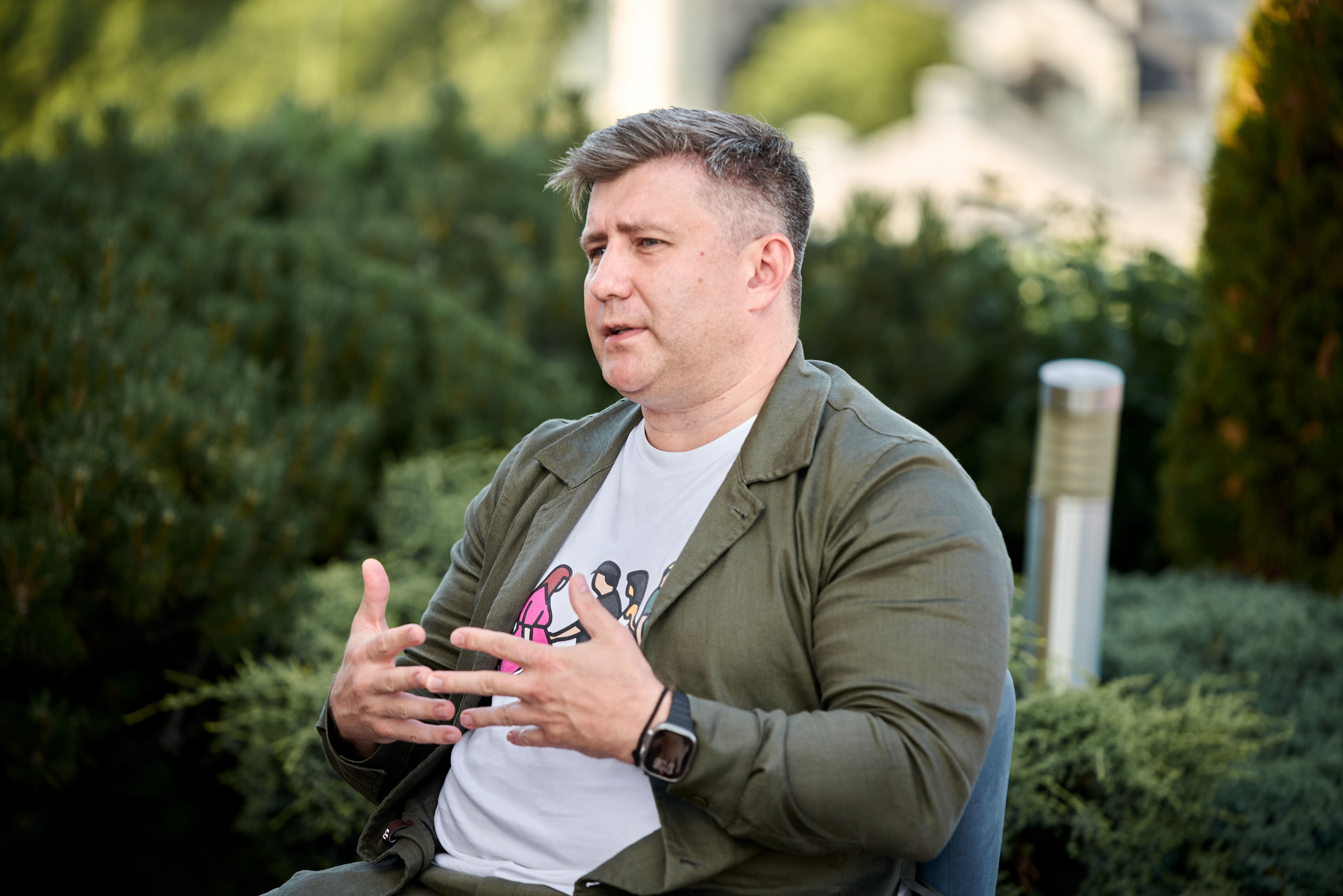
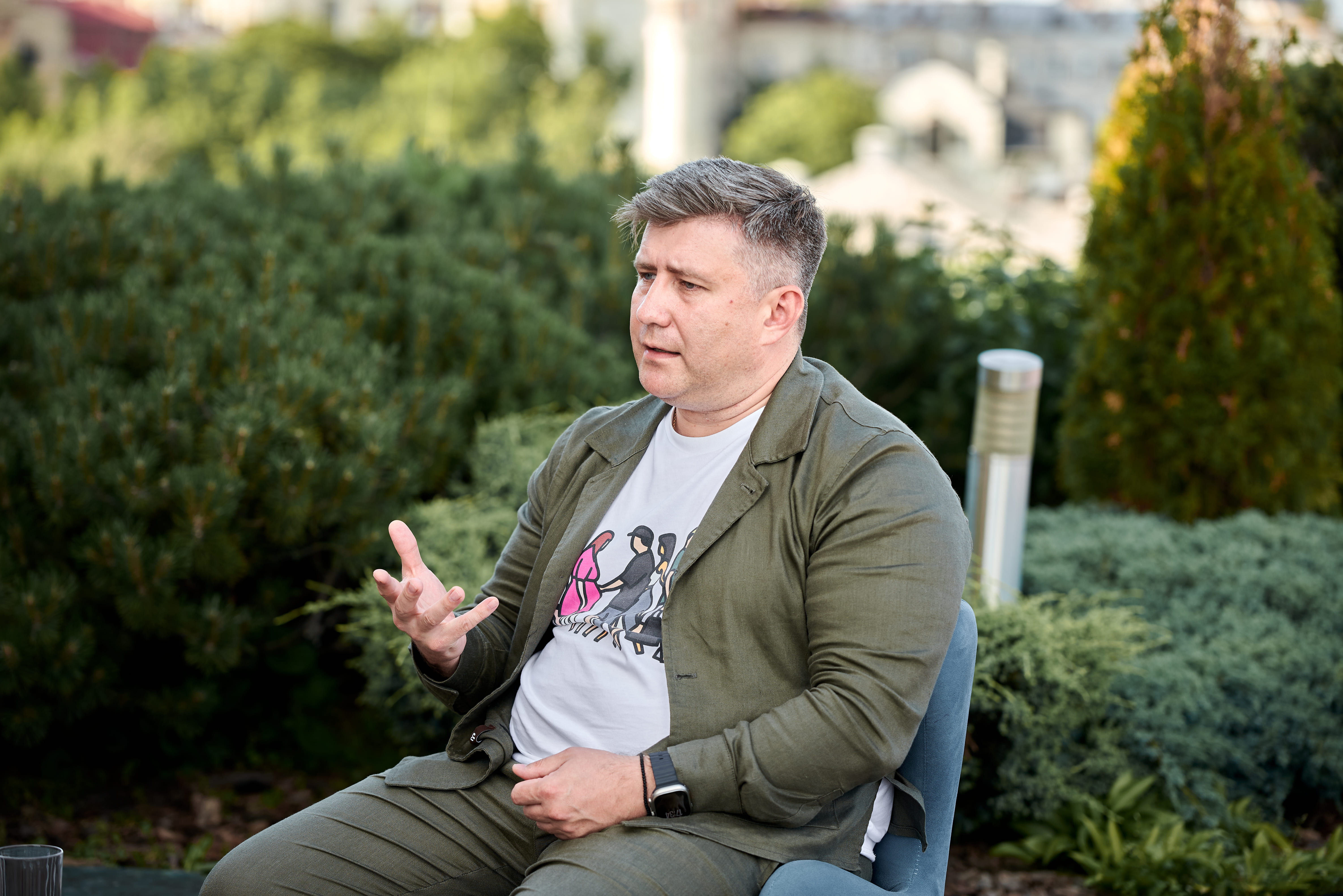
Delo.ua spoke with Oleksandr Kurkin, board member responsible for Proximity banking and network at Credit Agricole Ukraine, and asked why the Crédit Agricole Group is focusing on the Ukrainian market, how it envisions the development of small and medium-sized businesses, what is changing in automotive lending, and why proximity to the customer remains a core value of the bank.

Credit Agricole Ukraine has been operating in Ukraine for 33 years. How has your vision of the Ukrainian market changed during this time? What decisions do you consider to be the most strategic for the bank's development today?
– Thirty years is already a mature age for a business. To put it simply, throughout this time we have consistently confirmed one thing: Crédit Agricole Group wants to be present in Ukraine. Moreover, if you look more closely at the history of the Group, it began here much earlier. In 1896, the first financial institution was opened in Odessa, which later became part of the Crédit Agricole Group. Then came the exit from the Soviet space, and later – the return to the independent Ukraine. We are the oldest foreign bank in Ukraine. During this time, many changes have occurred.
We started as a corporate bank, supporting primarily the Group's international customers. Corporate business has always been our forte. Later, we acquired Index-Bank and began to build a universal banking model. In fact, the development of universal banking in different countries has always been part of the Group's strategy. Behind Crédit Agricole Ukraine stands the full strength of Crédit Agricole Group: the expertise of all its business lines, the breadth of its international footprint, its financial strength, as well as the security, compliance and asset protection standards provided by one of Europe’s leading banking groups.
If we talk about impactful decisions, then, of course, they were made during the full-scale war. Then the Group very quickly defined its stance: we will support the development of the Ukrainian economy.
We are not waiting for the rebuilding to begin after the war is over. We proceed from the fact that recovery is needed now. It is around this idea that our strategy is built upon.
We have identified several key industries in which we strive to be a systemic partner. Firstly, this is the agrarian sector, which is part of our DNA. The second area is the automotive industry. Today, many Ukrainians buying a new vehicle are aware that they can take advantage of the Credit Agricole Ukraine loan program. The third priority is energy, which is crucial for the country. The fourth is the IT industry, which remains one of the drivers of the Ukrainian economy.
It is in this context that our decision to acquire Bank Lviv should be viewed. It is a straightforward confirmation that Credit Agricole Ukraine is not waiting for better times to come, but continues investing in Ukraine even in wartime.
Why did you specifically consider Bank Lviv for the deal, and what opportunities does this integration open up?
– Talking about the strategy for the development of small and medium-sized businesses, this segment is of fundamental importance for Ukraine. Without strong SMEs, sustainable economic development is impossible.
Bank Lviv has developed recognised expertise in the SME segment, strong customer relationships and a solid regional presence. We see strong complementarities between our respective strengths: Credit Agricole Ukraine brings the experience of an international banking group with nationwide coverage and expertise across key sectors of the economy, while Bank Lviv has built a strong franchise and recognised know-how in serving SMEs.
Subject to the completion of the transaction and the necessary regulatory approvals, we believe that these complementary strengths could create additional value for customers and support the long-term development of the Ukrainian economy.How important is regional presence and proximity to the customer today?
– We even have a separate business line called Proximity Banking. This term is not very familiar to the Ukrainian market, so we often have to explain its meaning.
Proximity means being close to the customer. And we are convinced that this is one of the most important components of the banking business.
This is especially true for the premium segment and small and medium-sized businesses. It is important for such customers to work with a banker who understands their business, knows the specifics of the region, and sees the same risks and opportunities. It is this closeness that encourages trust and long-term relationships.
That's why we often talk about wanting to be 100% digital and 100% human at the same time. We're not one of those banks that plan to completely eliminate branches. We want to transform their role.
Routine operations should move to digital channels, but consulting, support, and building trust remain the realm of human communication.
Is there already an understanding of further development after the integration of Bank Lviv?
– First of all, we need to finalize the deal itself. Today, many are saying that Credit Agricole Ukraine has already acquired Bank Lviv, but in fact we have only signed a letter of intent to acquire. We still need to get approval from the Antimonopoly Committee and the National Bank.
What we can already say is that there are clear complementarities between the two institutions. Credit Agricole Ukraine benefits from a nationwide presence, while Bank Lviv has built strong expertise and customer relationships in its core markets. This combination creates an attractive foundation for future development. However, it would be premature to comment further on integration plans before the transaction is completed.
Despite the war, Credit Agricole Ukraine remains one of the leaders in automotive lending. How do you manage to maintain this position?
– Being a leader is always difficult, regardless of whether it is wartime or peacetime. Back in 2007, Credit Agricole Ukraine became one of the first banks on the Ukrainian market to actively develop car loans for private individuals. We now hold a 28 per cent market share, occupying a leading position in the car loan sector. This is the result of not one successful decision or action, but consistent work over many years.
Leadership is based on three things. The first is processes. How quickly and conveniently a customer can obtain financing. The second is a deep understanding of the market and customer needs. We know well what product will be in demand and how to build it correctly. The third is partnership. We have been working with importers, dealers, insurance companies and other market participants for many years. It is this ecosystem that enables us to maintain a strong position.
How has the market changed after the strong entry of Chinese car manufacturers?
– Chinese brands are indeed developing very actively. At the same time, our traditional partners are also not standing in one place. If you look at the offers from Toyota, BMW and other global manufacturers, they are very seriously investing in the development of products and services for customers.
Our role is to provide financing and make car purchase more accessible to more people.
How is the customer profile changing in retail banking?
– Ukraine is moving very quickly towards digitalization. And in many ways, the state is contributing to this. The Ministry of Digital Transformation is actually setting the pace for the entire economy. Thanks to this, customer expectations have changed dramatically.
Today, people want to access banking services anywhere, anytime. In the digital, hybrid form, or in-branch, depending on the situation. The pandemic and war have only accelerated this process.
Speaking of products, various affiliate programs for financing purchases are developing rapidly. Today, almost any product or service can be purchased in installments or with a credit limit.
For us, financing is primarily an opportunity to help a customer realize their plans. It's not just about buying goods. It can be home renovations, buying a car, traveling, or any other project.
Another important change is mobile banking. For many customers, the smartphone has already become the main banking tool.
Is the Crédit Agricole Group adopting the Ukrainian experience of digitalization?
- Crédit Agricole Group is fully committed to its digital transformation, with numerous innovations being rolled out across several countries. In France, this includes, among other things, the ability for customers to open a current account entirely online and independently, as well as the increasing digitalization of its services, illustrated by the launch of a fully online mortgage application process.
- In Ukraine, when we explain to our international colleagues how we manage to ensure the continuity of our operations, branch network and services in a wartime environment, their reaction is often the same: “Wow.” This resilience and adaptability have been essential. They have been made possible by the remarkable commitment of our teams on the ground, as well as by the unwavering support of Crédit Agricole Group, which has stood by our side since the very first days of the conflict.
How do you work with premium customers, particularly those from the IT sector?
– In my opinion, there is only one real product in premium banking – a person. It is about a personal manager who knows the customer, understands his/her needs and can quickly find a solution. This is the foundation of premium service. Everything else – club formats, events, special programs, extra services – only complements this relationship.
How to work with customers who are abroad?
– In fact, many premium customers remain in Ukraine. I was recently in Kharkiv and was pleasantly surprised by the number of entrepreneurs and company leaders who continue to live and work there.
One of the customers put it very accurately: the military does not protect buildings, but people. And if people stay in the city, then there is something to protect. Similar stories can be heard not only in Kharkiv, but also in Lviv, Ivano-Frankivsk and many other cities.
For those customers who travel a lot or live abroad, the Crédit Agricole Group’s international presence — with operations in 46 countries around the world — is a major advantage. This allows us to assist clients in almost any jurisdiction.
Credit Agricole Ukraine announces reinvestment of profits into the Ukrainian economy. What does this mean?
– First of all, we are a bank that finances the economy. Our loan portfolio exceeds UAH 30 billion, and this is already a significant contribution to the development of the country. The purchase of Bank Lviv is another example of direct investment.
At the same time, it is important for us not to simply leave the profit in Ukraine, but to channel it into the bank's capital. This increases the opportunities for further financing of customers and implementation of new projects.

What do you see as the role of the bank in the recovery of Ukraine?
– Our main function is to support economic development, finance customers and help businesses grow faster. This is where we see our key role in the country's recovery.
Today, the partnership approach is becoming increasingly important. It is no longer just about selling products, but about building long-term relationships and mutual trust between the bank and the customer. We see this in many industries, especially in IT, where a culture of partnership is an integral part of business development.
At the same time, we also focus on social responsibility. It is part of the Group's global strategy,which includes ESG approaches, support for sustainable development, financing of environmental projects, charitable initiatives and regional development.
We try not to scatter resources, but to concentrate on those areas where we can bring the greatest benefit. At the same time, every region of Ukraine is important to us, as Credit Agricole Ukraine maintains presence nationwide and feels responsible for the future of our country.