Inna Mokrovolska, HR Director of Credit Agricole Bank.
Since 2022, Credit Agricole Bank has been implementing internal mobility program and staff re-training to combat staff shortages. What has been the effect of the program on business outcomes?
- In Ukraine, many HR practices become particularly pertinent in war time. We view internal mobility as a tool to ensure business resilience. In the context of staff shortages and war challenges, we have gained the possibility to fill critical vacancies faster via the in-house talent. It enables us to shorten the search time for qualified candidates, to minimize expenses for external recruiting and preserve the expertise within the entity.
Also this approach when we consider internal candidates before starting the external search process, creates career growth opportunities for our employees who have work experience at the bank and are able to put to good use their knowledge and tried and true skills in their new position in order to achieve business results faster. The employees see real career opportunities within the bank, which positively affects engagement and staff retention. Consequently, the business gains flexible organization geared to quickly respond to market changes.
It’s a win-win situation for both the business and the team. We need to keep in mind that external hiring is not devoid of risks: whether the new person will be able to acclimate, meet expectations, uphold the very values and rules that make our entity successful. As of now, about a third of all the vacancies we have are filled internally. This way we ensure business continuity and achievement of our strategic goals.

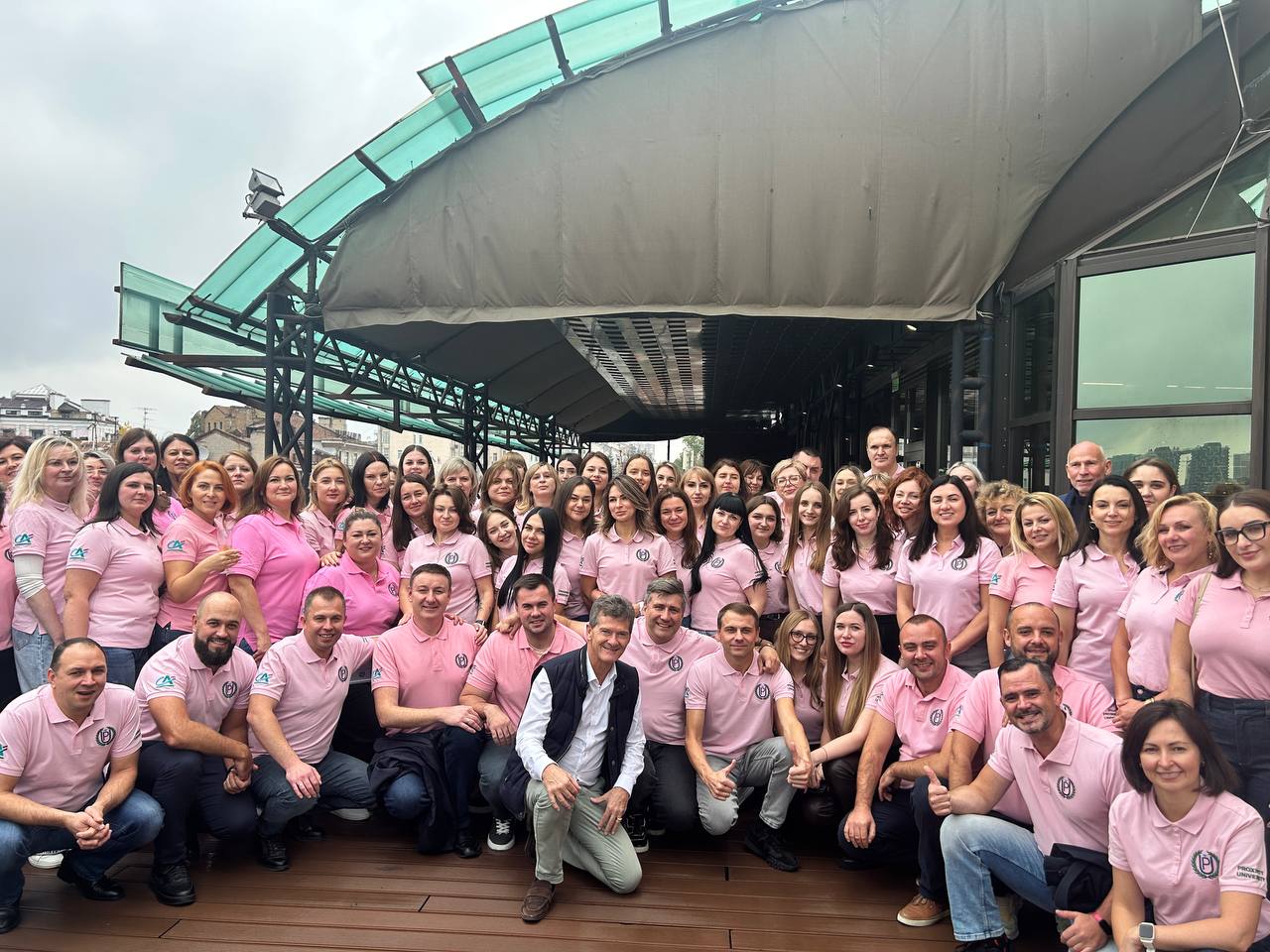
Participants of Proximity University learning program.
As part of its long-term strategy, the bank increases investments in personnel development in order to ensure access to new professions, career growth and creating self-actualized teams. What is the bank’s annual investment in education programs and what are its expectations for the end of 2026?
- Every year, we consistently grow investment in employee development. Our current budget for staff training is about UAH 20 million. We see it as strategic investment in order to remain competitive in the future. Our objective is to create a training ecosystem where every employee can obtain new competences, prepare for the next step of their career or even master a new specialty within the bank. By the end of 2026, we envision to increase the share of employees who take up regular training, expand the internal talent pool and better prepare our employees for the new digital and business challenges.
The bank cultivates continuous learning system as the foundation of HR strategy for the upcoming years. Could you share more about this system and its advantages?
- The continuous learning model means that development is not reduced to a one-off event and instead becomes part of the daily work. We create learning opportunities in various formats: online courses, external and internal trainings, microlearning, in-house academies, such as AgriSchool, mentorship, knowledge exchange between colleagues. The key advantage is that employees adapt to new market demands and technologies quicker. For the bank, it means greater speed of implementing the changes, development of innovations and creating the culture where learning becomes the inherent part of professional life.

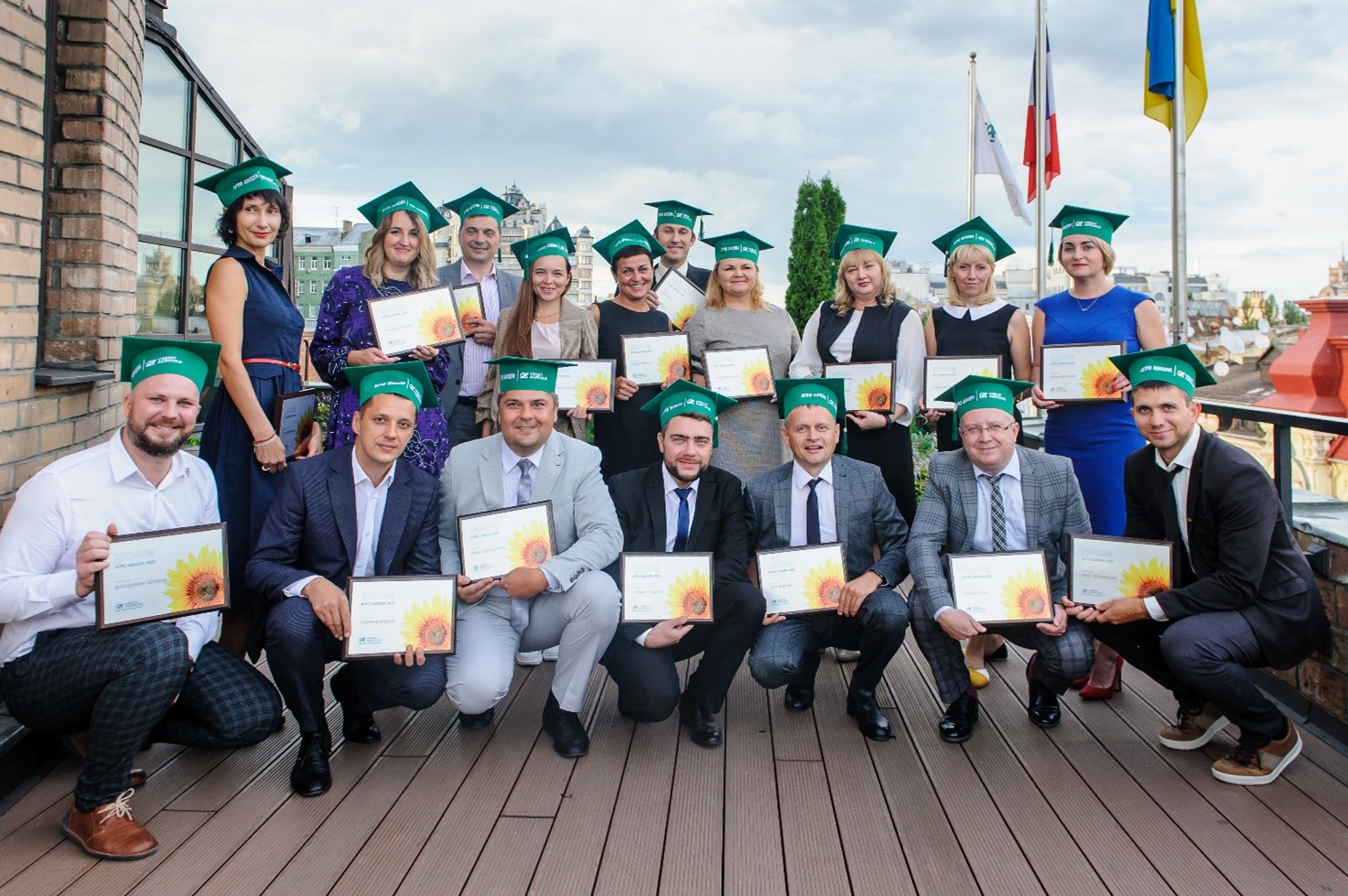
AgriSchool graduates.
The bank is at the forefront of HR processes digitalization. We have implemented digital recruitment, preboarding and onboarding, LMS system, HR analytics, automation of the full HR cycle, etc. Which digital tools are among the most sought after in HR and why?
- To date, the highest demand is for tools that help make data-based decisions and improve employee experience. These include, first and foremost, HR analytics, digital learning platforms, and AI-powered solutions. We understand that digital transformation enables HR teams to spend less time on administrative processes and more time on strategic tasks: talent development, organizational change, and business support.
At the same time, excessive digitalization can make working with people depersonalized and make employees feel neglected. What programs does Credit Agricole implement to support and engage employees during these challenging times?

Technology is meant to simplify our lives, however it should not replace human relationships. Our approach is to use digital tools to streamline processes while maintaining personal contact wherever critical. This is especially important for the culture of a French bank, where personal contact and human relationships are core values. Providing support and engagement during wartime requires being closer to each individual. This attention to and awareness of each person is the responsibility of direct managers, whom we train to be true leaders.
We also place a strong emphasis on employee support programs: mental health assistance, wellness programs, regular meetings with managers, social initiatives, and support for teamwork. Last year, the bank’s HR team won the “Well-being and Health” category at the annual All-Ukrainian HR Pro Awards 2025 with the program "You Can Rely on Credit Agricole".
The Solidarity Fund, sponsored by our French headquarters, helps our employees – particularly with the restoration of homes damaged by the war – and provides financial support in other difficult situations caused by the war. It is important to us that every employee feels not only the efficiency of our processes but also care on the part of the entity, which makes our HR activities socially oriented.

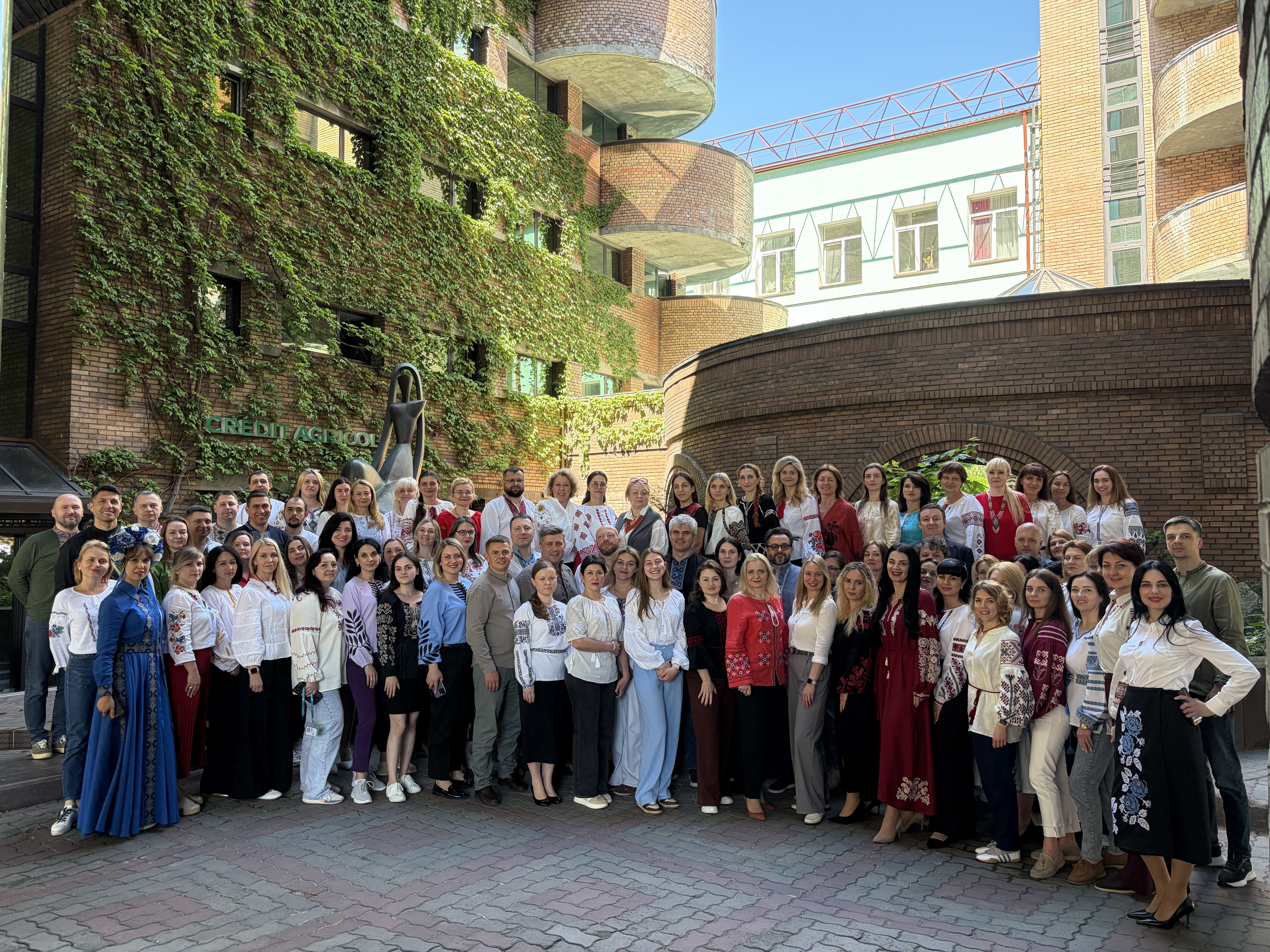
Vyshyvanka Day 2026.
What skills are in the highest demand in the financial sector today? What skills and professions are most sought after? How does the bank identify and build a qualified talent pool among its gifted employees?
- Digital skills remain in the highest demand. These include experts in data analysis, cybersecurity, digital products, process automation, and artificial intelligence, as well as analysts in various fields. At the same time, skills such as adaptability, critical thinking, change management, and cross-functional collaboration are becoming increasingly important.
To build our talent pool, we take a comprehensive approach: assessments of potential, leadership development programs, internal mobility, individual development plans, and regular sessions dedicated to analyzing our talent. This helps us identify future leaders and successors early on and prepare them for new roles.