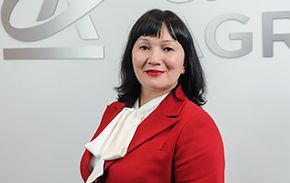
Ihor Hurzhii, head of Agri-expertise Division of Agribusiness Support Department and ESG
«Zerno» magazine, 13.11.2026
What does a farmer need for sowing? Machinery, seeds, fertilizers, personnel, diesel fuel. And for harvesting? Combine harvesters, grain elevators, trucks, diesel fuel, personnel… And what is needed year round? A bank. Funds.
It’s challenging for farmers to work with banks because they aren’t familiar with banking technologies, and bank employees often have no understanding of the specifics of agricultural cycles or how to manage a farming business. However, this isn’t the case everywhere. There is a bank created specifically for farmers—and, historically, by agricultural producers themselves. This is Credit Agricole Bank.
ESG – environmental, social, governance
Today we are speaking with Ihor Hurzhii, head of Agri-expertise Division of Agribusiness Support Department and ESG.
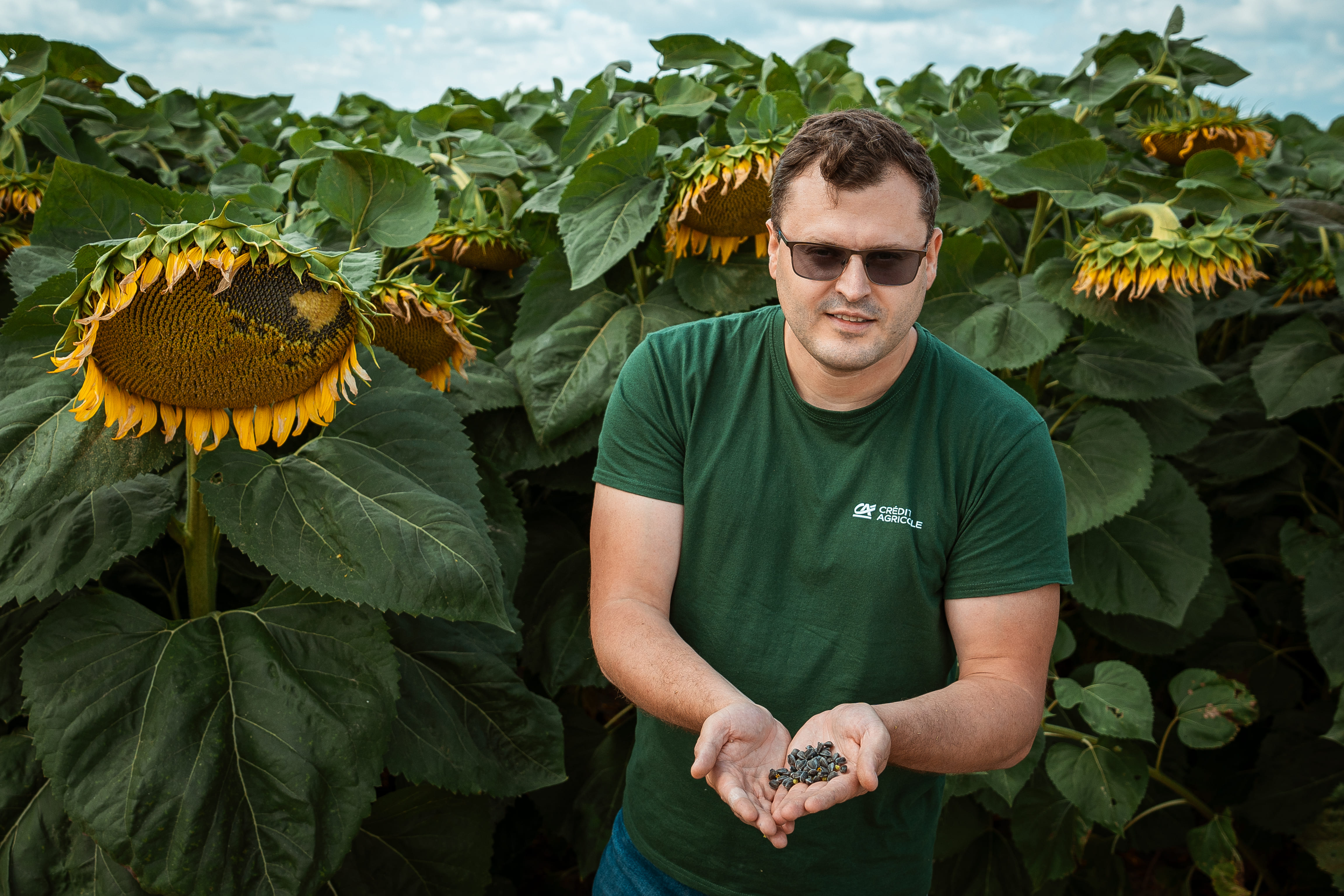
Photo: Latifundist.com
– I have been with the bank since 2013, – told us Ihor. – We started with a compact agri-expertise division and later, in 2016, Credit Agricole Agribusiness Support Department was created. Three years ago, ESG expertise was added to the Department’s functions.
ESG is a set of specific factors and metrics that measure how a company performs in terms of environmental and social responsibility. ESG factors are principles of sustainable development, which stand for:
Environmental;
Social;
Governance.
You may have also come across a different term—the principles of sustainable development. Although these terms are often used interchangeably, ESG has a more specific meaning, reflecting the official criteria for evaluating the environmental, social, and governance aspects of a company’s operations.
– Today, I’m working on technical analysis of producers, preparing customer financing support documents, and, at the same time, handling everything related to ESG assessments of agricultural producers, – shared Ihor Hurzhii.
– Quite a range of responsibilities. And how did you develop your expertise in agriculture? After all, you have to be both a qualified banker and a professional agrarian to have a deep understanding of this field.
– In our department, there are five people with degrees in agronomy and expertise in veterinary medicine. I have a degree in economics and finance from Dnipro State Agrarian and Economic University, as well as a technology degree from the University of Agronomic Sciences and Veterinary Medicine of Bucharest. In addition, I have obtained further education at French institutions specializing in finance. This enables me to view customers from a business perspective and accurately identify their financial needs.
A team of five specialists is small for a bank like Credit Agricole, that is why in 2018 we founded our AgriSchool for our employees that deal with the agrarian companies. The Agri-School enables us to share knowledge about the agricultural sector across all units of the bank – from risk management and credit analysis to outlet managers, managers, and methodologists. By understanding the specifics of agribusiness and the origins of financial indicators, our specialists can better develop products and communicate more effectively with customers.
A farmer bank for farmer needs
– Do you personally know any farmers or agrarian companies?
– Certainly. My father worked as the chief agronomist at a farm of 10,000 hectares for 40 years. So I’ve been involved in agribusiness since childhood. As I graduated from Dnipro State Agrarian and Economic University, I have a lot of acquaintances and former classmates who are in various areas of agribusiness. And this knowledge and these connections help me do more in my job than just be an analyst, risk manager, or economist.
– Credit Agricole is a bank that traditionally ranks highest in terms of reliability… What is your impression of this financial institution today? What about its potential, strategies, and plans?
– I suppose I should start with some history. The group originated in France and was founded by farmers to provide mutual support. It’s a cooperative, so Credit Agricole is owned by the farmers themselves. I’ll go even further: the top managers at Credit Agricole’s regional branches, which are located throughout France, are also farmers. These are people who work the land and, at the same time, manage the bank through the Federation of Regional Branches (Caisses Regionales).
Credit Agricole has been operating in Ukraine for 33 years. Throughout this time, the agricultural sector has remained one of the bank’s key areas of focus, and support for agricultural producers has been an important component of its business model in Ukraine. In fact, a specialized department was created specifically for this purpose to better manage local risks by gaining a deeper understanding of the agricultural sector and the development prospects of various segments.
Why is this important? Every sector of the economy has its own unique characteristics. And it is essential for a bank to be aware of these characteristics in order to offer the right products and avoid risks. If a bank understands this, it can avoid problem loans, capitalize on market opportunities, and grow faster than other banks – particularly in terms of financing volumes. We differ from other financial institutions in Ukraine in that we specialize in agriculture – a strategic focus area for the Crédit Agricole Group. And we are experts in agribusiness.
Automotive lending as part of agribusiness support
– I noted that despite your strategic area, the bank is at the top of automotive lending rating in Ukraine…
– It’s actually quite simple and logical. Our bank is one of the automotive lending leaders in Ukraine, but if you look at our customer base, you’ll see that it includes many farmers for whom a car is a business tool. These include both individuals and businesses, but the lion’s share of our portfolio consists of agribusinesses that have a need for car loans.
Credit Agricole holds the leading position in agricultural and car lending based on the results of the prestigious annual study “25 Leading Banks of Ukraine” conducted by the “Financial Club” agency.
Philosophy – supporting production
– I get the impression that in our country, Credit Agricole works more with businesses than with individuals. Outside of Ukraine, however, Credit Agricole is known as a retail bank—it has over 50 million customers, primarily individuals. Why has this structure developed?
– In Ukraine, Credit Agricole began as an investment bank, so its core customers were legal entities of various sizes; however, following the merger with Index Bank, the bank began actively expanding its services to individual customers. Today, Credit Agricole is a universal bank that works with large, medium, and small businesses, as well as private customers. This also applies to agricultural producers. In particular, we have begun actively working with small farmers – those with 100 to 500 hectares of land – to whom we offer quick solutions, simplified analysis, and a streamlined set of documents.
We have simplified the list of required documents to make it easier for this segment to work with the bank. We offer such customers – who own 100–500 hectares – unsecured financing. We clearly understand that, despite their successful operations, farmers in this range often face challenges in providing collateral. In other words, even from the perspective of corporate segment financing, we are diversified here. We have large loans for major agricultural holdings, medium-sized loans for smaller customers – 2, 3, or 5 thousand hectares of land – and small producers with 100 or 150 hectares, with whom we work very actively.
I wouldn’t say that the level of risk is the same in every segment, but our goal is to be diversified and to support each segment. Our vision, our philosophy, and our strategy are to support agricultural production at all levels. And in Ukraine, this production is concentrated not only in large companies, but also in medium-sized and small ones.
Sense of time
– Do bankers have a sense of time? Are you aware of the problems faced by farmers who, amid the war, are suffering from export restrictions and a shortage of working capital? Do you take note of these problems, and are you taking steps to meet agricultural producers halfway?
– If you take the whole year – 365 days – we spend half that time on the road, out in the field. We communicate directly with farmers and agricultural producers of all sizes. We know what’s happening in the market. We first sensed the problem with the port blockades back in June; we saw that shelling of Black Sea deep-water ports was becoming more frequent. Accordingly, we developed various scenarios regarding our customers’ needs and their working capital requirements – this scenario worked out. Today, all agricultural producers are approaching banks not for investment financing, but for working capital. It’s essential to get the seeds in on time. This can be done with older equipment –the purchase of new equipment can be put on hold – but you cannot put the sowing itself on hold.
Credit Agricole is understanding of our customers’ needs; we are loyal to them and take a realistic view of the situation, recognizing that it may change. We are trying to support everyone – by postponing loan repayments for some and providing additional financing for others. However, there is an important point to keep in mind: many agricultural producers have not yet had time to modernize their equipment. Currently, demand for investment financing among agricultural producers is on hold, so cumulative demand is building up for the period after the ports reopen. And in our scenarios, we factor in future demand for equipment investments once the port blockade is lifted. It’s possible to work and plant with old equipment, but there will be significant losses. For the sector to develop, access to innovation is essential – and this can be achieved through financing with Credit Agricole, whether through financial leasing or traditional investment loans.
– Do you have your own personal forecast regarding the situation with the ports?
– In the context of war, it is not realistic to make such a forecast.
– I agree. However, some experts say that navigation will begin in a year, while others predict that it will begin in the spring…
– We are currently in a situation that is significantly worse than in 2022, when only the ports were closed. Today, there is a more insidious problem: port facilities have been damaged. Even if ships are not coming under fire, it will take time to repair the port infrastructure. Exports will not return to full capacity immediately; decisions regarding the export of our own products must be made with a long-term perspective. I’m not talking about temporary alternative routes, but about export alternatives that must be permanent. This will eliminate the risk of maritime corridors becoming inoperable and will bring prices down.
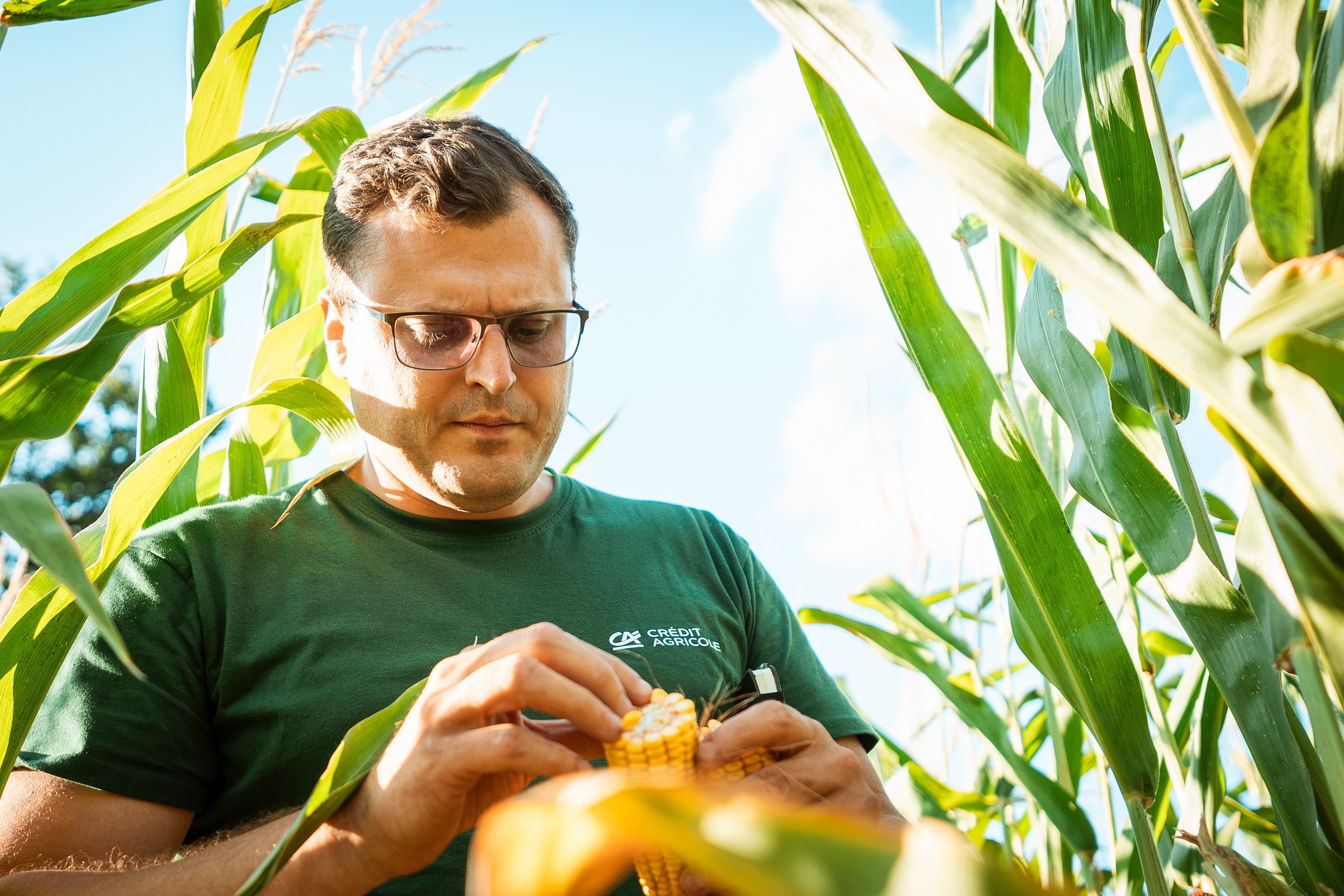
Photo: Latifundist.com
Rules are rules
– How do you work with a specific customer? Let's say a farmer with 1,000 hectares comes to you and asks for a loan. What does he need to provide to the bank?
– Like every bank, we have a list of documents required for considering a loan application, but no one has done away with the practice – common to all banks – of reviewing financial statements as the first step. So, we start with the income statement and balance sheet; we need to see the operational performance for the previous period to understand the business’s effectiveness and make projections. We work with customers who have successfully completed two full seasons for the current and previous periods. The amount of financing depends on the results of previous years, the current year, and our assessment of the forecast. If a customer comes to us and asks for an unrealistic amount, we won’t be able to provide it, since we realistically assess the need for financing and the debt burden, as well as the customer’s ability to service a potential loan.
Starting in 2024, in addition to the list of financing documents for agricultural customers, we ask that you also complete the ESG questionnaire, which is a requirement at the Crédit Agricole Group level. Starting at the end of 2024, this will be a requirement for all agricultural customers planning to participate in the 5-7-9 program. In addition to the usual financial and agroeconomic indicators, we need to assess the social and environmental impact of operations in the areas where the agricultural company operates.
– Do you segment your customers based on whether you're dealing with an agricultural holding, an agricultural company, or a farmer, or do you have the same requirements for everyone?
– As for two years of profitable operations and a stable financial position – that’s a requirement for everyone. Beyond that, we do segment our customers. At Credit Agricole, a customer with revenue between €2 million and €10 million is classified as a small or medium-sized business; between €10 million and €200 million as a mid-corp or medium-sized business; and over €200 million as a large local business. Revenue of up to €2 million falls into the “proximity” segment. In other words, a customer with up to 500 hectares would fall into the “proximity” segment, provided their annual revenue is up to €2 million. Depending on which segment the customer belongs to, an analysis is conducted.
For the small-scale farmer segment, where we are actively expanding, there is a streamlined list of documents – often blanket financing – and a simplified loan application that is a hybrid of scoring and automated analysis. It uses industry benchmarks that enables us to determine where a customer stands and whether we can provide them with financing. For such a customer, we can make a decision within a few days, depending on how quickly they submit the documents.
With large customers, there are sometimes cases where it takes a long time for the customer to provide the necessary documents, so the decision is made accordingly. However, if the documents are ready, we can make a decision very quickly – and this falls within the authority of the regional committee.
For mid-market loans, the regional credit committee may make the decision if the loan amount is small; if it is substantial, the decision is made by the senior credit committee. For large files that go to the Senior Credit Committee, the Credit Analysis Department is always involved; it takes into account the official audit and the agricultural team’s opinion, and a joint decision on financing is made.
– And today, right now, which segment is reaching out to you the most, and what are their needs?
– The first thing people are asking for these days is working capital financing. And this need is greatest in the small and medium-sized business segment. We’re already seeing requests from large corporate customers, but we can’t say there’s strong growth here, since there aren’t as many of these customers in the market as there are small and medium-sized ones. However, it’s already apparent that the period for reviewing credit limits has come one and a half to two months earlier than last year. The issue of frozen accounts is present across all customer segments.
Money is cheaper under partner programs
– How would you rate the competitiveness of your bank’s lending terms? What solutions does Credit Agricole offer its customers to ensure access to financing on favorable terms?
– There is the 5-7-9 program, which has effectively leveled the playing field for everyone. We are also very actively involved in this program, which has created equal conditions for all banks. If we look at traditional lending, Credit Agricole offers the best terms in Ukraine regarding the financing costs. I can confidently say that we have a very large portfolio of partners; we offer over 70 programs with manufacturers and dealers of agricultural machinery, as well as producers of seeds, plant protection products, and mineral fertilizers. For example, we have the “Lehko-Posivna” program (Easy-Sow). These are short-term tranches, even with an interest rate as low as 0.01%. Consider the current inflation rate in the market, compare it to the 0.01% interest rate, and you’ll see that these are favorable terms for agricultural producers. These are five-month loans backed by collateral. There are no better financing terms on the market.
By the way, regarding the terms: I’ve already mentioned successful financial performance and the ESG assessment. At the same time, the most important condition for all banks – and for Credit Agricole in particular – is successfully passing a compliance audit. Pursuant to the requirements of the NBU and Credit Agricole, we can only work with transparent companies whose sources of funds are officially verified. Therefore, the main stages are the compliance process, financial analysis, and the ESG questionnaire. These requirements enable us to identify our most reliable customers so that we can offer them the best terms on the market.
– Within the banking sector, Credit Agricole is one of the main champions of European banking culture and European operating principles. A distinctive feature of this culture is that European banks carry out banking operations – which are considered extremely conservative by Ukrainian banking standards – over a longer period of time, for example, due to mandatory checks on the origin of funds and so on. This ensures Credit Agricole’s top ranking in terms of stability and reliability in the NBU’s ratings, but it complicates relationships with customers. How do you resolve this dilemma?
– Yes, we are a bank with a European culture. And we understand that the source of our lending resources is the deposits of our depositors – the farmers. We cannot put our customers’ deposits and our reputation at risk, which is why there are additional regulations. This helps us filter out reputational risks and risks associated with financing activities that we should not be financing. This creates certain conditions in terms of market competitiveness and the speed of decision-making. However, it is also our advantage. Anyone who works with Credit Agricole on deposit-related transactions can be absolutely certain that their funds are safe and protected. Most of our customers are willing to wait a while, knowing that they are using the services of a reliable institution that is free from the risks inherent in some other institutions on the market. This is the price of comfort and confidence. Although we do not require more than what is required of us by the NBU or the Crédit Agricole Group.
In addition, when working with agribusiness customers – small and medium-sized businesses with revenue of up to €10 million – we provide tailored solutions (such as blanket financing, if needed; however, it’s important to understand that blanket financing will be slightly more expensive due to its specific nature). Furthermore, for this segment of customers, we are always ready to provide specific recommendations, market insights, and consulting – this may seem intangible at first, but within the customer’s development strategy, it ultimately translates into higher yields and greater resilience to climate change, and this is how our customers receive solutions they cannot get from other banks.
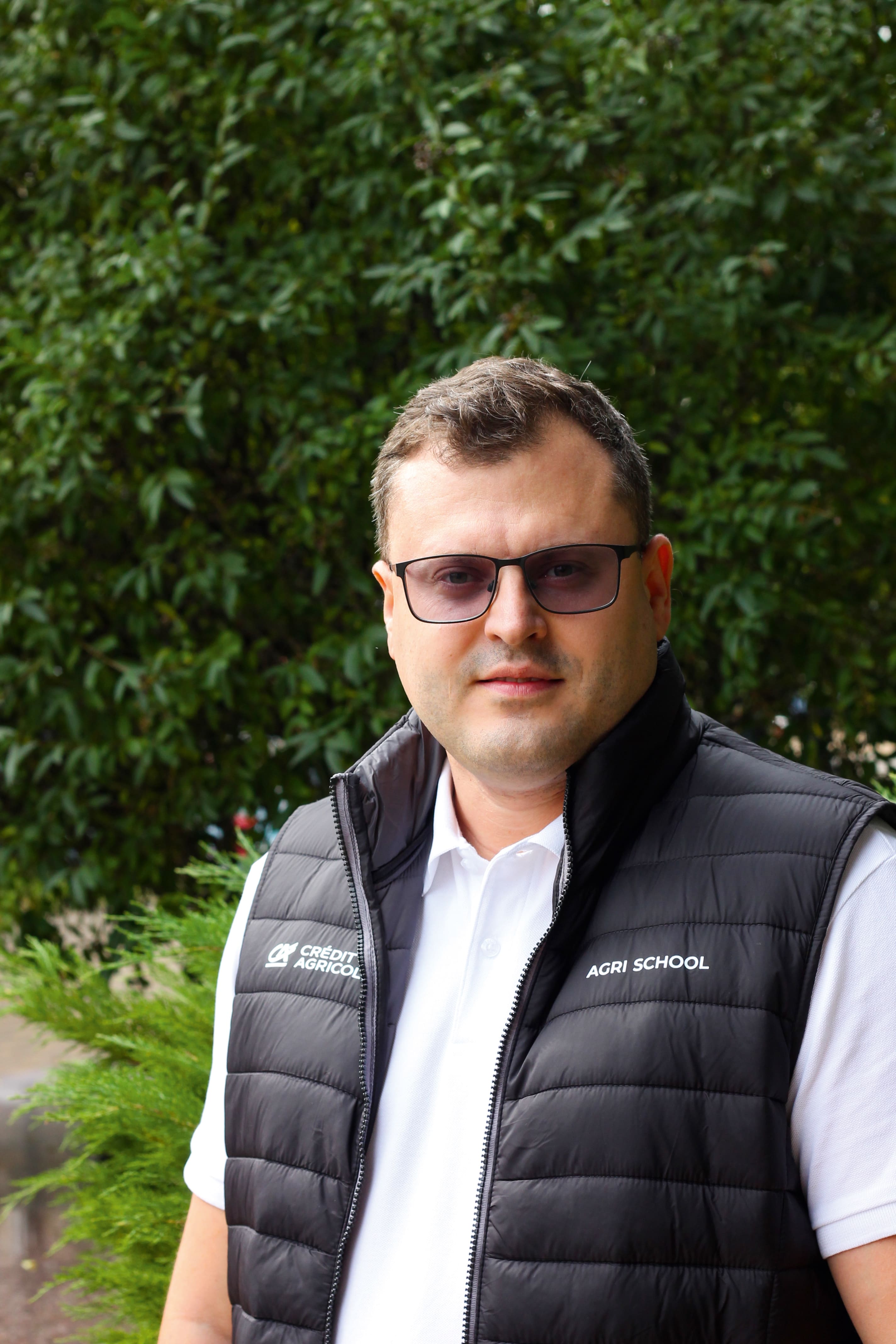
Photo: Latifundist.com
Sowing? Easy!
– Have you considered developing special programs for the upcoming crisis and post-crisis periods? After all, you must have noticed the cumulative effect on investment funds for upgrading equipment fleets…
– Today, we’ve outlined three scenarios for the grain corridor: extremely optimistic, moderately optimistic, and realistic. Even if these gates open, not everyone will be able to ship their goods through at the same time. There will be a line, and there will be competition. Let’s look back on the previous years – there was a line of grain trucks stretching for several weeks just to get into the ports. And this problem is already taking shape. For half a year, grain prices were very good: 32,000–35,000 for sunflower seeds, 9 for corn, and 10 for wheat. This fall’s sowing season can be managed as well – partly thanks to the own funds and partly thanks to loans – but from a market perspective, the most acute problems will arise in the spring.
The most labor-intensive crops are planted in the spring. Sunflowers are hybrid seeds that are expensive to buy and which are simply unavoidable. Corn, soybeans. Of course, there will be some optimization in terms of mineral fertilizers and plant protection products, but even with the optimization of available resources accumulated during the war, there won’t be enough to carry out the sowing season properly.
From Credit Agricole’s perspective, we see this clearly and are preparing for it. Our portfolio includes a number of partner programs that will help finance the sowing season at minimal cost. I’ve already mentioned the “Lehko-Posivna” program for sunflowers, which offers tranches of five, six, nine, or twelve months. However, the customer will be able to sow.
We take a similar approach with plant protection products. Our partners in the mineral fertilizer sector are Makosh and Timac Agro. We also offer some of the best terms on the market with them. When it comes to the production cycle – seeds, crop protection products, and fertilizers—we provide financing for these needs through partner programs, and then, based on a realistic scenario, the grain corridor opens up.
When it comes to fuel, we also have a good partner. However, this is a short-term matter involving working capital. Nevertheless, we always think strategically, with a long-term perspective in mind.
We finance the solar. And accummulators
– Do you have any partners among equipment manufacturers or distributors?
– Yes. We work with all the market leaders. We work with John Deere – they are our partner in Europe, and this year we have significantly increased our financing for them – but there are also quite a few other well-known brands in our partner programs.
The financing of energy projects is a fairly large-scale and interesting aspect of Credit Agricole’s operations. Everyone understands the current state of our energy infrastructure and that there will never be enough funds to restore it. We are developing partnerships with companies that install solar panels and supply the necessary equipment and batteries for them. Currently, we have five partners: Rayton, Solar Family, West Vector, SUNSAY NRG, and ECOTECH. At the same time, we’re exploring opportunities to develop partnerships in the biogas sector. These are expensive projects, and I wouldn’t say they’ll happen overnight – they’re likely projects that will begin after the war. By the way, the biogas project enables us to fulfill our obligations to the EU regarding European integration and environmental protection, so biogas could become a very important matter within the next 2-3 years. The partner programs offer very attractive terms; they’re flexible and feature a convenient repayment schedule.
Financial leasing is also very interesting, especially when combined with the 5-7-9 program. We’ve achieved strong results with this product in the market and have moved up several spots compared to other market players. Granted, there will be a certain slowdown now due to the pause in investment projects, but this is precisely when we will be offering financial leasing – that is the strategic vision of our management.
To summarize, here’s what we can offer agricultural producers today: working capital, either secured or unsecured financing; partner programs involving the vast majority of distributors; and investment financing, which I would break down into three categories. The first is investment financing for agricultural machinery (tractors, sprayers, combine harvesters). A separate category is financing for energy independence (solar panels and batteries). And when I spoke about affordable working capital financing, we can offer the same type of financing for investment projects through our partnership programs. This year, we began offering factoring programs – this may be of interest to customers who have accounts receivable.
Keep the real figure in mind
– Do you accept crops as collateral? Is this option available for these types of products?
– At the moment, we are simply working through these issues from a legal standpoint. This concerns the topic of agricultural receipts and agricultural notes; we will come to these solutions.
– So, a farmer who has been farming for the past 15 years comes to see you. There were times when he easily made a profit of $500 per hectare, and sometimes even $1,000…
– Good times.
– I agree. However, today this farmer comes to you, and you realize that his business model simply can’t work: fuel prices have skyrocketed, gas prices have risen, logistics costs have increased, and the port blockades have led to domestic product prices that are half of global prices. What advice will you give them? After all, changing their model is what is needed to mitigate risks.
– Yes, I work on this every day. When it comes to economic efficiency, the figure that often appeared in customer documentation – well, not a thousand per hectare, but €500 in profit per hectare – was considered the norm. That made agricultural lending very attractive. The situation is different now due to the factors you mentioned, but I’d add climate change to that list. The climate in 2016 and the climate today show two completely different pictures. Farmers today cannot even dream of 10-12 metric tons of wheat or corn per hectare. Today, it’s all about economics. Access to credit and its cost also directly affect the production cost per hectare. First, we need to stabilize the negative trend where we’re seeing a decline in profit margins. If a loan application is for a large amount, we bring in agricultural experts. We identify the underlying cause. If the causes are market-related and beyond our control, the best solution is to diversify the business. However, many customers face not only market-related risks but also local risks. Climate change and the reluctance to aim for 8 metric tons of corn per hectare instead of 12. After all, even 12 metric tons per hectare can be unprofitable. It’s better to aim for 8 metric tons but make a profit of €100 per hectare. This involves working on the customer’s mindset and strategy. The market doesn’t stand still. Today, there are excellent selection companies (including among our partners) that offer hybrids providing greater resilience and adaptability to climate change, as well as flexibility in response to varying levels of investment.
So, if we’re dealing with a customer whose operational efficiency has declined in recent years, we first determine whether the cause is market conditions related to price. And this can be easily tracked by looking at yields over the past ten years. We look at the annual increase in production costs. If it falls within reasonable ranges, then the increase was indeed market-driven. Here, diversification is key; we need to move away from a system where sunflowers accounted for 70% of the crop mix. This creates climate, environmental, and market-related pressures. It’s a “hit-or-miss” approach to farming that very often results in failure. Next: if the risk is more localized and related to operational activities. Then we need to move toward innovation: precision farming, variable rate input applications, taking advantage of a field’s strengths, and avoiding investment where there are no prospects. This involves the variable rate application of mineral fertilizers and plant protection products, as well as differential sowing.
There’s something really positive about this story – it gives us a chance to rethink our approach to primary soil cultivation. We’ve talked about fertilizers, seeds, and plant protection products, but let’s talk about fuel. At the start of the war, fuel cost… The war has been going on for so long… I think diesel cost UAH 21-22, including VAT. As of today, diesel costs UAH 100. The price has increased fivefold. Let’s move on. We’re currently talking a lot about the blockade on grain exports out of Ukraine. However, imports are also very challenging – for diesel fuel. For now, we’re importing it from the western borders, but if the shelling intensifies, this will become a problem. So, if our diesel consumption per hectare is 85 liters, while another customer’s is 60 liters, for whom will the crisis in the agricultural sector be a more acute problem? For the one with higher consumption. I’m talking now about switching from conventional tillage to minimum tillage – strip-till, no-till, or simply disc harrowing. In addition, covered soil helps retain moisture. For these customers – who make up a significant portion of our customer base – we have developed a carbon program in collaboration with our partners, Agrosem and eAgronom. Customers who switch to minimal tillage receive additional revenue from the sale of carbon credits. It may not be a huge amount, but over five years, the accumulated sum will help cover a significant portion of the investment. Credit Agricole is the only bank in Ukraine with a carbon program. And we can offer the best financing to support our customers during this transition period.
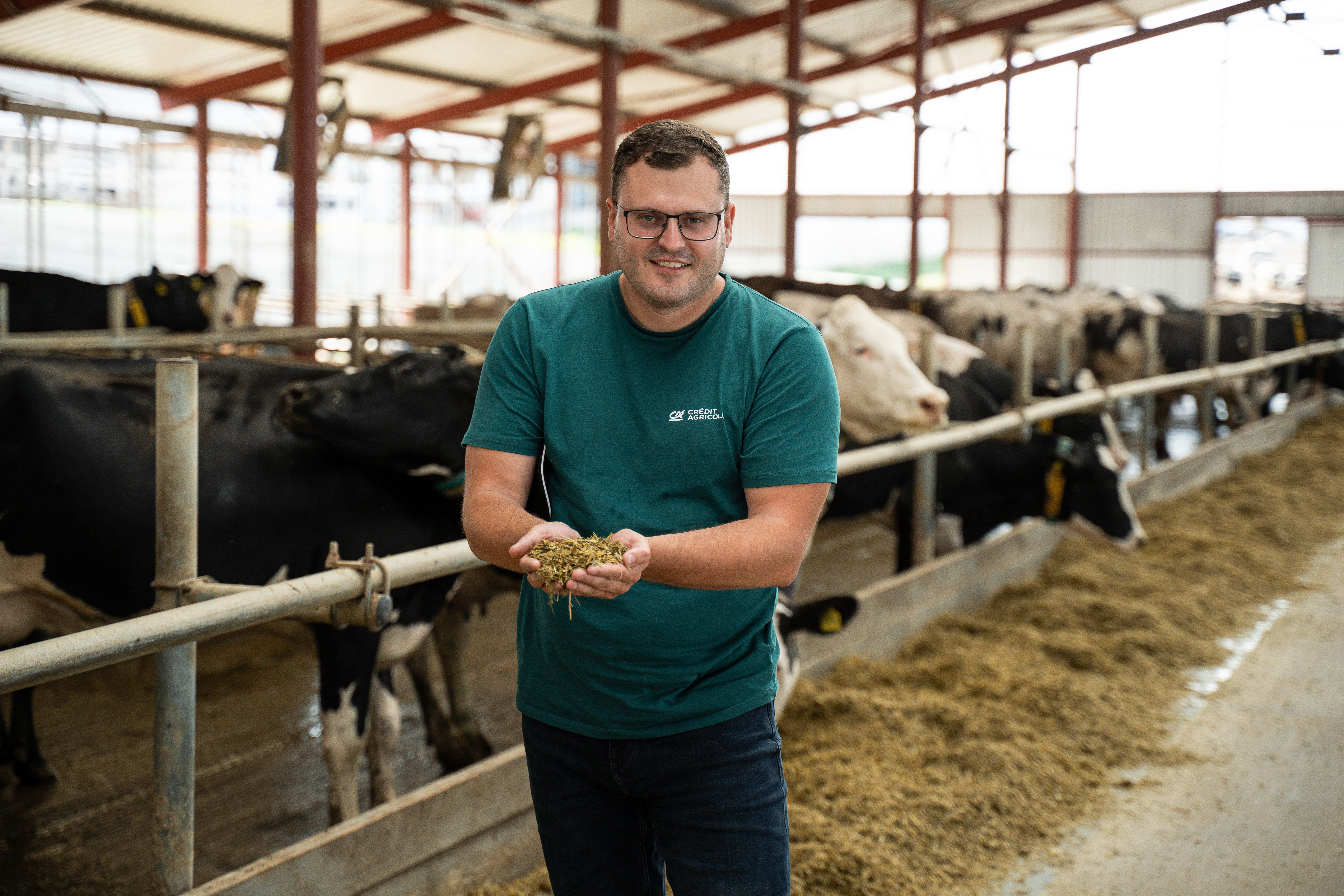
Photo: Latifundist.com
Those compliant with ESG will access the EU easier
– Does your strategy include a postwar period?
– Yes. Credit Agricole is actively expanding in Ukraine. Despite the challenges with exports, we continue supporting our customers. To strengthen our presence in Ukraine, we’ve signed an agreement to acquire Bank Lviv. We’ll intensify our collaboration with our partners, as together we’re shaping the agricultural sector’s ecosystem. When a farmer grows, they grow alongside our partner – who is a producer of seeds, crop protection products, and fertilizers. This helps create added value for the entire ecosystem. They are the bank’s customers, and we know our producers and farmers in detail, so together we create synergy for the entire agricultural sector. And in terms of European integration, we are actively guiding our customers toward ESG standards.
As we get closer to the EU accession, these requirements will apply to absolutely all businesses – including those in the chemical and fertilizer sectors. The agricultural producers who are prepared for these requirements will be the first to reap the benefits of the EU accession. One-third of those who completed the ESG survey had the minimum required documents, while 70% were missing one or more documents. Many lacked the most essential document – the Certificate of Authorization to Work with Pesticides. It’s very easy to obtain, and the document is inexpensive. Another required document is a regulation or policy for handling citizen complaints. People in the community need a mechanism for submitting complaints to improve communication. We’re in the midst of a war, and few people are paying attention to this, but there is currently an opportunity to lay the groundwork for activities that will begin here very soon.
We advise and support agricultural producers, because these steps are transforming the market. Together with Credit Agricole, we have a unique opportunity to build a better future right now.
The interview was conducted by Yurii Honcharenko