The Page, 11.11.2026
During the fifth year of the full-scale invasion of Ukraine, a company’s resilience is often determined not so much by financial indicators as by its ability to serve as a pillar of support for its employees during challenging times. For Credit Agricole Bank in Ukraine, caring for its team has long gone beyond the basic social package, and humanity has become a key component of its corporate strategy.
Inna Mokrovolska, director of the Human Resource Department at Credit Agricole Bank, tells The Page about the transformation of CSR initiatives of the bank under the influence of challenges, support for the mobilized people and veterans, taking care of employees’ mental health, as well as engagement in the volunteering initiatives.

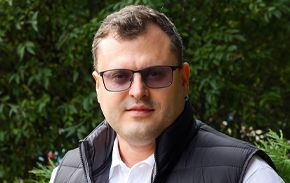
Inna Mokrovolska, director of the Human Resource Department at Credit Agricole Bank
How the Focus of Credit Agricole Bank's CSR Program Has Changed Over the Past 10 Years
In 2016, Credit Agricole Bank in Ukraine launched the WeCare! corporate social responsibility (CSR) program, which was founded on the global principles and values of the international banking Group.
At the very start of the initiative, its annual budget was UAH 200,000. The main goal was to unite employees around good causes and gradually foster an internal culture of charity. The program covered four core areas:
- caring for employees;
- charity;
- volunteering;
- environmental initiatives.
Over the course of a decade, WeCare! has scaled up and evolved into a true support ecosystem. The COVID-19 pandemic served as the first major stress test for this system.
“At that time, the bank preserved jobs and salaries, swiftly transitioned most head office employees to remote format of work, and ensured a high level of safety at its outlets,” comments Inna Mokrovolska, director of the Human Resource Department at Credit Agricole.
However, the events of 2022 called for even more radical and swift decisions. At that time, standard HR policy tools were supplemented by:
- evacuation programs for employees and their families;
- additional payments and targeted financial assistance for those who lost their homes or were injured;
- launch of a comprehensive support system for mobilized colleagues and veterans.
Therefore, due to the challenges posed by the war, the focus shifted from traditional corporate events and the promotion of a healthy lifestyle to the physical safety, medical care, financial stability, and mental health of every individual on the team.
Of course, Credit Agricole Bank’s corporate social responsibility in Ukraine extends beyond its own team. Since the start of the full-scale invasion, the bank has realized over a hundred charitable initiatives, investing more than UAH 190 million. Among the main areas of focus are systematic support for hospitals, orphanages, and a perinatal center that specializes in caring for premature newborn babies.
“Over the past ten years, WeCare! has evolved from a volunteer-driven initiative into a systematic approach with specific programs, budgets, and support mechanisms, and, most importantly, it continues to operate where people need help the most,” says Inna Mokrovolska, director of Human Resource Department at Credit Agricole Bank.
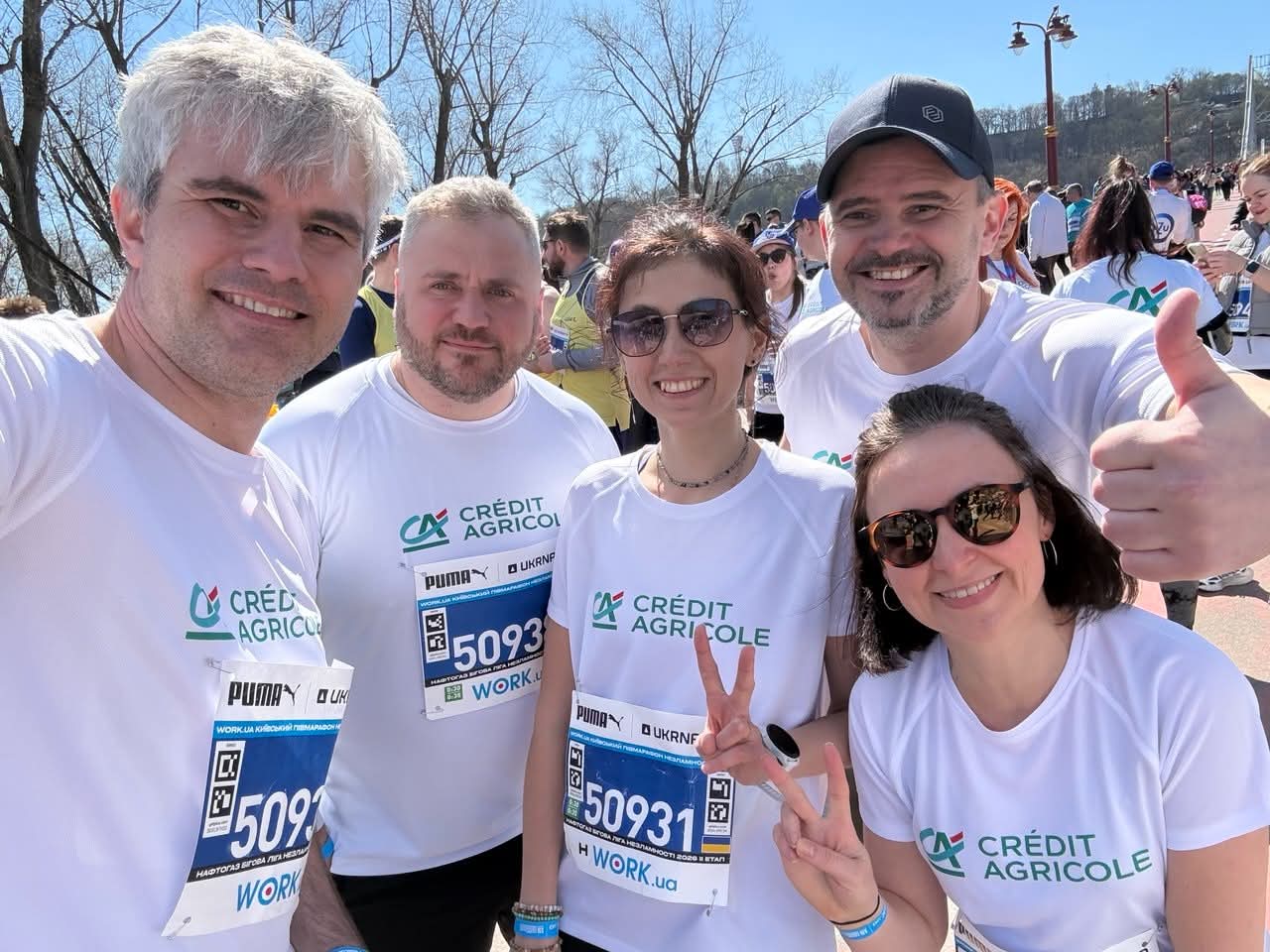
Kyiv Unbroken Half Marathon 2026
Compensation and Support Policy at Credit Agricole Bank: Financial Stability as a Foundation of Security
At the start of the full-scale invasion, Ukrainian businesses were forced to optimize their resources, so salary increases for staff were, at the very least, put on hold. However, as Inna Mokrovolska explains, to maintain a sense of confidence in the future among its employees, Credit Agricole Bank continued its regular salary reviews and allocated UAH 100 million for additional payments to colleagues during the war.
An individual approach to each employee’s needs is reflected in the bank’s targeted assistance program. Since 2016, Credit Agricole Bank has operated the “We Care” Charity Fund, which provides employees with financial support for their own medical treatment or that of close relatives.
As part of the “Our Health” program, over UAH 14 million has been allocated to assist colleagues facing critical and severe illnesses. It is important that the budget for this initiative is funded jointly by contributions from the bank and charitable donations from the employees themselves.
Following the start of the full-scale invasion, when enemy shelling began to destroy civilian infrastructure, Credit Agricole Bank launched the “Sweet Home” program. With the support of the Solidarity Fund (the solidarity fund of the international Credit Agricole Group), the bank allocated over UAH 3.7 million to restore employees’ damaged or lost property, as well as to cover housing and household needs.
At the same time, the “Supporting Our Close Ones” program was launched, which provides charitable assistance to employees and their first-degree relatives who have been wounded or killed as a result of hostilities. The bank has already allocated more than UAH 3 million to this area of focus. Specifically, in 2024, it allocated UAH 1.5 million to provide a prosthetic limb for an employee through the Superhumans center.
In addition to compensation and targeted assistance, Credit Agricole Bank’s employee care package includes health and life insurance, as well as individual and group psychological counseling (including sessions with military psychologists and child specialists).
Recreation in the Carpathian foothills has also become a popular option. In 2025 alone, 207 people, nearly one in ten employees, benefited from the bank’s special wellness program at a sanatorium; since the launch of the initiative, more than 1,700 employees and their family members have enjoyed a vacation in the Carpathians.

“SVITIrun” Charity Run, Lviv
It is also worth mentioning the support provided to mobilized colleagues who are defending the country, as well as the assistance offered to veterans as they transition back to civilian life. The bank preserves the positions of mobilized employees and continues to pay their average salary, while also providing psychological and legal assistance to them and their families. To systematize these efforts, the bank adopted a Veterans Support Policy in 2024.
To summarize, since the start of the full-scale war, Credit Agricole Bank has allocated over UAH 200 million for direct support of employees. This amount includes expenses for health insurance, life insurance, targeted assistance, support for mobilized employees and veterans, rehabilitation, health improvement, and additional incentive programs. The international Credit Agricole Group also plays an important role, having established a solidarity fund of EUR 10 million, part of which was allocated to support Ukrainian colleagues.
“The war hasn’t eliminated the need for teamwork or professional development, but it has shifted their place among the priorities. Practical support, which helps people cope with specific life circumstances, has come to the forefront,” says Inna Mokrovolska, director of the Human Resources Department at Credit Agricole Bank.
The best confirmation of the HR strategy’s effectiveness comes from the team’s feedback. According to internal anonymous employee surveys (eNPS), satisfaction with employee welfare programs remains consistently high. In particular, over 80% of surveyed employees are satisfied with programs such as “Our Health,” “Supporting Our Close Ones,” and “Sweet Home.”
Credit Agricole Bank’s Culture of Mutual Support: When Caring Becomes a Shared Cause
At Credit Agricole Bank, we believe that a true corporate culture isn’t built by decree, it grows through specific actions and the understanding that everyone’s contribution matters. This is highlighted by the work of the “We Care” Charity Fund, which operates thanks to contributions from the bank and monthly voluntary donations from employees themselves, funds that are pooled and directed to colleagues in times of need.
In addition to internal support within the team, the bank’s staff actively participates in helping the community. Inna Mokrovolska mentions corporate blood donation as an example.
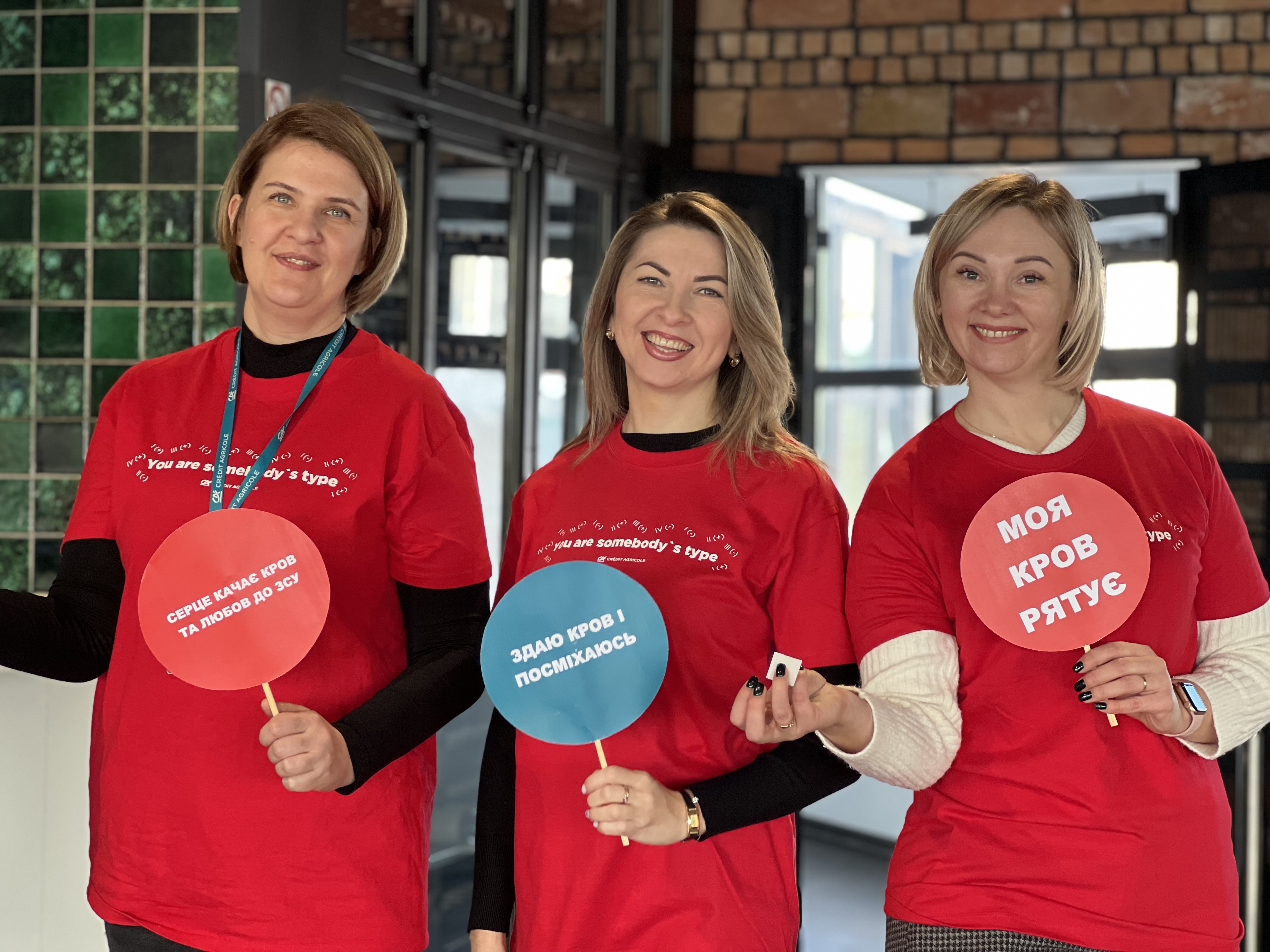
Blood donor day 2025
“In 2025, more than 280 employees in Kyiv, Poltava, Lviv, and Ivano-Frankivsk donated over 120 liters of blood for hospitals. Additionally, more than 250 colleagues completed specialized training in providing first aid,” says Inna.
The employees’ contributions are also recognized at the national level. In 2025, the Association of Ukrainian Banks awarded two representatives of Credit Agricole Bank as the most active volunteers in the financial and banking sector.
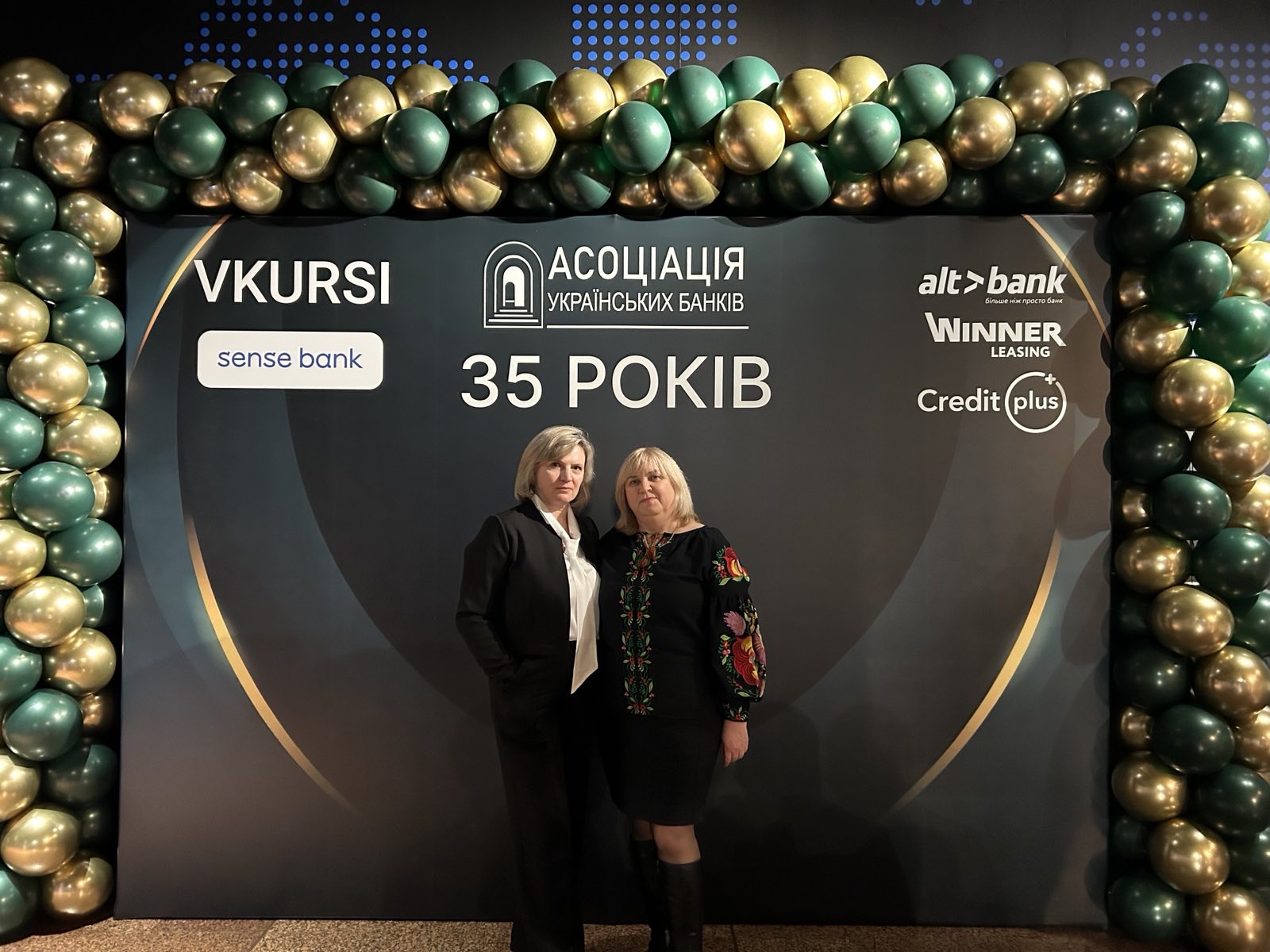
Liudmyla Kysleiko, outlet manager in Vinnytsia, and Mariia Hut, a senior economist in banking operations accounting
They are Liudmyla Kysleiko, outlet manager in Vinnytsia, who has been helping military units, hospitals, cancer centers, and a children’s rehabilitation center, and Mariia Hut, a senior economist in banking operations accounting, who regularly helps prepare meals for defenders, the elderly, and internally displaced persons.
“This work is not always an easy one – both mentally and physically – yet it brings strength, inspires with so many sincere people around, and reminds that even the smallest help is very important. I don’t intend to stop… Thanks to the bank’s Management Board, I have the opportunity to take an additional time off for my volunteering. It is a very important support,” shares Mariia Hut.
Relying on an External Provider: How Credit Agricole Bank Organizes Psychological Support
In the face of prolonged stress and pressure, caring for the psychological wellbeing and mental health of the workforce becomes a top priority. That is why Credit Agricole Bank now provides access to individual and group counseling sessions with psychologists for employees and their family members.
Inna Mokrovolska emphasizes that the bank deliberately rejected an internal psychological support model in favor of collaborating with external, independent providers. This ensures maximum confidentiality for employees seeking assistance. Starting in 2024, the program was expanded to include individual sessions with military psychologists for those who have been mobilized, veterans, and their close ones.
“Involving military psychologists is extremely important. Despite the universality of many psychological practices, the experience of military service, being in a combat zone, injuries, adaptation after demobilization, or the life of a service member’s family all have their own unique characteristics. A military psychologist better understands these circumstances and challenges, which allows for more relevant and effective support,” says Inna Mokrovolska.
Systematic research marked an important stage in the evolution of psychological support at the bank. In 2025, when the bank adopted its Psychosocial Support Policy, more than 600 employees participated in an anonymous survey on mental wellbeing. This made it possible to clearly identify the level of burnout and the current needs of the workforce.
A new project for 2026 is “Resource Meetings.” These are small online groups (up to 16 participants) that meet once every two weeks. They are designed to help participants reduce stress, restore a sense of support, and share experiences in a safe environment. Employees highly value this format of support.
“It was incredibly helpful to learn all these effective physical exercises, get advice, and find motivation. Now I try to revisit the material we covered and review the presentations from time to time. This knowledge really helps me recharge,” shares one project participant.
How Credit Agricole Bank Supports Mobilized Employees and Veterans
Currently, 79 bank employees are serving in the military; Credit Agricole Bank is preserving their positions and maintaining their average earnings for each of them.
According to Inna Mokrovolska, after the start of the full-scale war, the bank’s Human Resources Department established a separate Social Programs Support Division, one of whose primary focuses is supporting mobilized employees, veterans, and their families. A coordinator for soldiers and veterans is responsible for this area, providing guidance and support to employees at various stages of their service, their return to work, and their adjustment after demobilization.
Raising awareness among the employees has become a separate area of focus. The bank hosts open webinars on appropriate interactions with veterans and people with disabilities, and has developed guidelines and practical sources on barrier-free communication. Additionally, each year the bank supports initiatives by the international Group to organize Diversity Weeks and Months in support of inclusion and equality.
“We view our work in this area as a crucial element in creating a supportive environment where soldiers and veterans can obtain the necessary information, advice, or assistance when needed, and where our staff will better understand the unique aspects of their experiences and the challenges they face when adapting to the environment,” emphasizes Inna Mokrovolska.
So far, 10 employees have returned to the bank’s team following their demobilization. Most of them immediately resumed their regular responsibilities, while one underwent requalification and completely changed roles. Inna Mokrovolska emphasizes that at this stage, the individual pace of adaptation is very important: “The transition from a military rhythm to a civilian one takes time. Managers should take a flexible approach to initial tasks, avoid overloading employees, and give them time to ‘get back into the swing of things.’ The team should be informed about a colleague’s return, adhere to the ethics of professional communication, and create a predictable, calm, and safe environment.”
Even amid constant challenges, the bank continues to prioritize the wellbeing of its team and realize charitable projects, as these investments extend far beyond business results, Credit Agricole Bank concludes.