Mind, 29.05.2026
Vitalii Kucher on the process of institutional “maturing” of large businesses, the financial market's adaptation to European requirements, and niche products for farmers
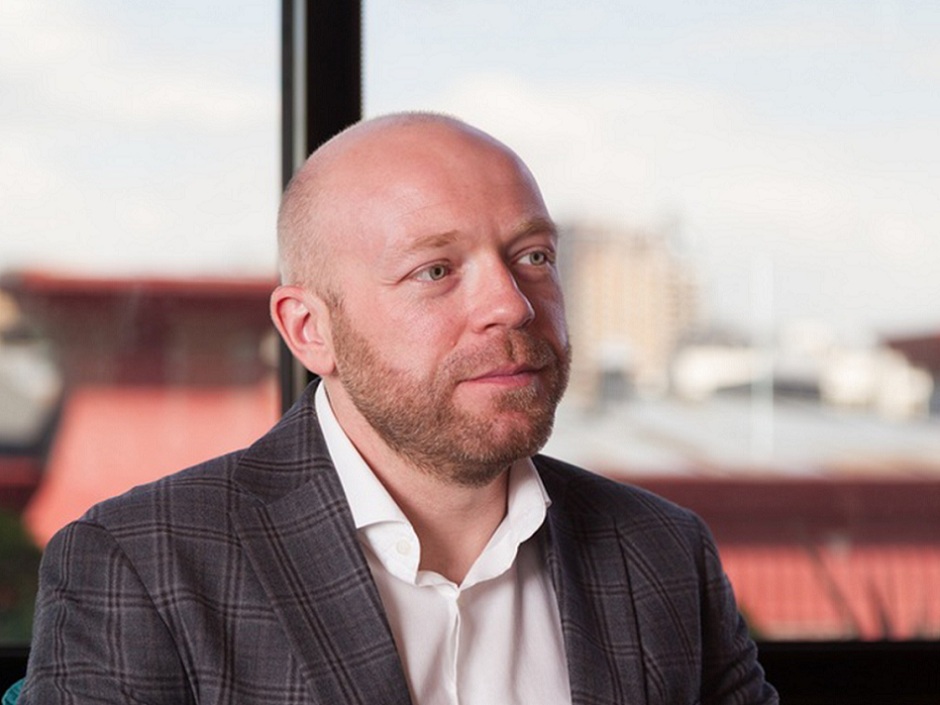
Vitalii Kucher, the Board Member and Chief Financial Officer of Credit Agricole
Balancing financing needs of businesses with banks’ credit risks always involves a compromise between stimulating the economy and protecting their own assets. Successful collaboration between the financial sector and manufacturers is based on three key aspects: risk management, responsiveness to entrepreneurs’ needs, and government support.
During martial law, the main trends in lending to Ukrainian businesses include lower interest rates, record demand for long-term loans (over three years), and expanded financing for the defense industry, construction, and energy independence.
As part of its special project ”Businesses and Banks: Matter of Loan”, Mind chose one the leading banks in Ukraine, French bank Credit Agricole, and spoke with the Board Member and Chief Financial Officer Vitalii Kucher about credit risks for the banks, business needs, and the intersection of interests among all participants in the financial chain. The growing demand increase for market-based loans, long-term loans, and bad debts, banks’ requirements for borrowers during wartime, war time insurance, and forecasts regarding the declining price of borrowed capital.
On corporate lending
– In 2025 and the first few months of 2026, there was steady growth in corporate lending. What factors are driving this trend?
– Regarding the corporate lending market last year, the banking sector grew by an average of 40%, and our bank has also shown a 40% growth in this segment.
As for our bank, the agricultural sector (agricultural production + primary processing and trading) had the most dynamic growth: in 2025, the loan portfolio increased by 38%, reaching UAH 18.9 billion. It makes sense, considering our historical positioning and experience in supporting the agricultural sector. Moreover, agriculture is the largest component of Ukraine’s export structure.
Looking at the key factors and drivers last year, I would highlight loans for investment purposes (purchasing equipment, upgrading agricultural machinery). Generally, the increase in the share of agricultural machinery over the last year was quite significant: partially due to international support programs, cashbacks, and active partnership activities. In other words, there is noticeable growth in the agricultural sector, both in working capital and investment loans.
Putting aside the agricultural sector, the energy sector showed significant growth. As of early 2026, the portfolio of loans provided to finance energy facilities amounted to UAH 1.8 billion. I should note that many of our customers were interested in loans for solar power stations, wind power generation, and biogas facilities. We have provided a significant amount of financing to this segment (loan portfolio: UAH 1.3 billion as of May 2026) and plan to continue doing so.
The FMCG sector (fast-moving consumer goods, distributors of agricultural equipment and plant protection products) and the automotive sector grew quite well. I would also single out the pharmaceutical sector. There are companies in this sector that are actively investing; there is strong domestic demand as well as demand for exports.
– It is understandable that the rapidly growing sectors you listed are the ones raising financing through loans. And which businesses (large companies, SMEs) make up the majority of new borrowers?
– I would focus on agricultural sector. In the realm of segments, there are different players. For example, there are MNC (transnational) and large corporate companies, with whom we traditionally have strong partnerships. Obviously, these are traders (grain, oilseed) and vertically integrated agricultural holdings.
In addition, there is strong momentum in the local corporate sector and among SMEs. In other words, we are seeing steady demand from small companies (including those in the agricultural sector). And when it comes to small agricultural companies with a land bank of no more than 500–1,000 hectares, we have started working with this segment and are seeing active demand and growth.
At the same time, we were exploring at how to strengthen our business model, at the development of Credit Agricole Ukraine and decided to consider the acquisition of Bank Lviv, which is located in the relatively western region of the country and specializes on these segments specifically (SMEs and agriculture). We hope that, subject to regulatory approval, the agreement will help us develop the small-scale agricultural segment, with which Credit Agricole has only recently begun to collaborate.
– Speaking of the structure of Credit Agricole’s loan portfolio, how and why has it changed by sector (agriculture, defense, energy, real estate development, other industries) over the past year, since the first quarter of 2025?
– When it comes to our loan portfolio, agribusiness accounts for 50%. This share is relatively stable and remains our primary focus. It makes sense, since even the bank’s name, Credit Agricole, translates from French as “agricultural loan.”
As I mentioned earlier, the sectors that are growing (in terms of volume) include trade, energy, and pharmaceuticals. However, we hardly work with the construction sector at all: as of now, this industry’s share in our portfolio is quite low. The debt in the construction sector amounts to UAH 400 million, or 2.6% of the total medium corporate business portfolio.
We may begin to consider long-term development projects more actively as part of Ukraine’s recovery program. Credit Agricole is incorporating this into its strategy and aims to become a major player in this market niche. Specifically, we intend to provide approximately 5% of the total financing needs (with a focus on logistics and infrastructure restoration).
– Does Credit Agricole Ukraine develop separate lending programs specifically for exports?
– As of today, we have quite extensive expertise working with companies engaged in import and export activities. There are many international companies among our customers that operate as traders (exporting/importing). We also have quite a few Ukrainian customers with export contracts abroad.
Overall, our product line is quite sufficient to meet all customer needs, so there is no point in adding new. I will just note that we run separate partnership programs with international financial institutions (such as risk-sharing, which helps reducing the need for collateral, etc.).
– According to the NBU, in 2025, the growth rate of loans with terms exceeding three years was nearly double that of loans issued for shorter terms. What is driving this increase in the maturity of loan debt?
– This is a positive indicator, for the economy as well. Traditionally, most of the loans in Ukraine are for financing working capital with the term of up to one year (particularly for sowing process: sowing, gathering, and selling). At the same time, the investments with the term of three to five years indicate that the companies are willing to play the long game, invest in the equipment, upgrade the machinery, etc.
Meaning that companies see their future in Ukraine. In particular, it is considered a significant advantage when the customers begin investing in the equipment that allows to process, shape the end product and margin in one place, pay taxes to the country, and later export the end product, instead of raw materials.
According to NBU statistics, the business expectations index in March 2026 (for the first time in the last two years, during which it had been declining on a quarterly basis) reached its highest level: 52.7, compared to 45.9 in February 2026. This suggests that businesses had been postponing their demand for a very long time, refraining from investing in projects or upgrading equipment while waiting for better times. And the time has come: companies are deciding to stay in Ukraine, invest in expanding their capacity, upgrading equipment, and so on.
On demand for soft and subsidized loans
– Can we say that there is a growing demand from businesses for market-rate loans (non-subsidized) and that their share in the banks’ total loan portfolio is growing?
– All customers are financially literate and good at calculating. And the market shows that demand is elastic. If a customer has an offer for a soft loan with cashback, guarantees—that is, with options that allow them to purchase something on more favorable terms—they will, of course, opt for subsidized loans and such.
For example, when a customer plans to modernize agricultural equipment and has access to government leasing support programs, such as “5-7-9,” in particular through the partnership between Credit Agricole Bank and the American agricultural equipment manufacturer John Deere, receiving financing under 0% and potential cashback opportunities, market conditions naturally become a less decisive factor in making an investment decision.
Overall, looking at the mix of soft and standard loans, I would say I don’t see a change in the trend. The share of subsidized financing (grants, partnerships) remains significant, reflecting the important role these programs play in supporting the recovery of Ukrainian businesses. After all, the logic behind these initiatives and the mechanisms for attracting funding from European partners were specifically designed to support Ukraine’s economy during this period. And the expected effect is being achieved. Over time, the market balance may gradually shift, but I do not see such trends happening in the next year or two.
– What is the ratio between new loans issued through subsidy programs (such as “5-7-9”) and regular loans, those issued on market terms?
– In my opinion, it’s a 50/50 split. When it comes to targeted subsidy programs, they are not available to all customers (since customers must meet a specific set of requirements). As for other segments that do not qualify for these programs, we operate on market terms. However, it is worth noting that all banks have sufficient capital and liquidity. When discussing market conditions, it is worth emphasizing that competition in this segment has increased significantly.
– For what purposes does the business most often attract financing under current conditions (is it to finance current needs or investment projects)? How have their shares changed over the past year?
– Looking at the structure, 80% of loans today are for financing working capital. This indicates that our businesses have a specific business model that is cyclical. Typically, the cycle for most companies is one year or slightly less. It is clear that they need to finance this working capital.
It is important to note here that procurement costs, international market prices, and import costs are rising. The reasons include events in the Middle East, inflation, and exchange rate fluctuations. Consequently, the demand for financing working capital in real terms is also growing. As I mentioned earlier, this accounts for 80%.
The other 20% are the investment needs. This involves financing machinery, equipment, leasing, and so on. Here, we see steady demand—about 20% of new loans—and a trend toward growth. This relates to what I mentioned earlier in our conversation: companies that remain in Ukraine despite the war are willing to consider investment projects with a term of more than one year and are ready to secure financing for them. Our task as a bank is to offer them relevant partnership products and provide financing on the most competitive terms possible.
– So, is there a trend toward longer-term loan maturities?
– In my opinion, there is a steady increase in the demand for investment loans. And I see this as a positive trend.
If we look at growth rates, demand for investment loans with terms of 3–5 years is growing slightly faster than those for working capital. The volume of investment loans issued under partnership programs in 2025 grew by +142%, to UAH 1.5 billion. Demand continues to grow in 2026 as well. In the first three months, we’ve seen a 54% increase in financing (loans and leasing).
On long-term loans and alternative financing
– And when it comes to long-term loans, what specific projects is the business currently financing with borrowed funds?
– I would mention energy efficiency and energy independence. Credit Agricole finances wind and solar power generation projects, as well as biogas. The point is that when vertically integrated agricultural holdings are looking for ways to optimize operating costs, including reducing their dependence on electricity providers they are building self-sufficiency. And for this, they need “long-term financing,” because the payback period for such projects is typically 3–5 years or more.
Many companies have a need to upgrade their agricultural equipment or corporate vehicles and specialized machinery. There is also growing demand here, and we are financing it. Typically, some companies, already having depreciated machinery and equipment, would postpone such investments. But now we see a positive market environment in terms of prices, with good offers and demand, and banks are helping customers upgrade their fleet.
There are also companies in the agricultural and pharmaceutical sectors that are investing in production expansion and can build new production lines (equipment) in Ukraine. In particular, in the agricultural sector, there are companies interested in building production capacity that creates added value specifically in Ukraine. So, we’re not just talking about growing grain, but also about processing and, depending on the final product, attempting to maximize their own income.
– Are businesses turning to alternative financing instruments, such as factoring, letters of credit, and leasing, and what percentage of financing does this represent?
– We see an increasing demand for leasing every year, which currently accounts for 10–15% of Credit Agricole’s total lending. Its advantage is that the customer can obtain equipment without collateral (since the leased asset itself serves as collateral). For businesses, this is convenient, straightforward, and beneficial. For banks, it is acceptable from the perspective of credit policy and collateral assessment.
As for factoring, today in Ukraine it is a fairly concentrated and small market in terms of volume, which, for example, lags far behind the Polish market. But we still see potential here. Credit Agricole is currently implementing factoring, which we will launch soon.
As of today, there are 4–5 banks operating in the Ukrainian factoring market, covering 90% of the market. But, as I just mentioned, there is potential, since it involves optimizing working capital (the speed of obtaining funds). I think this market will grow both in overall volume and in the number of players interested in using this tool.
In addition, I would also like to mention some interesting projects that certain customers can implement directly with international financial institutions (EBRD, EIB). For example, these institutions finance the expansion of production capacity for some customers, helping them build a sugar factory or an additional terminal. This format is not traditional bank lending, as it takes place directly in cooperation with international financial institutions.
– What about letters of credit? Or are they not very popular?
– As for letters of credit, we offer those as well. But letters of credit, surety for a bill, promissory notes, and IOUs are all elements of trade finance. It’s a somewhat specialized product, so I wouldn’t lump it in with standard lending.
Credit Agricole offers export letters of credit and has a team dedicated to this. We’re seeing year-over-year growth in this niche. And that indicates that, overall, our exports and manufacturers are thriving. But when it comes specifically to the structure of loans, leasing, and so on, I’d emphasize that today 80–85% is accounted for by loan financing. Leasing accounts for about 15%, but we see a trend toward an increase in its share of total disbursements; specifically, for the first quarter of 2026, we are already recording nearly 20%.
Requirements for borrowers and reasons for bank rejections
– How are banks’ requirements for borrowers and their approaches to reviewing loan applications changing?
– When it comes to applications from legal entities and businesses, the market is currently lively, competitive, and growing rapidly. And here, it’s crucial to be present in the market: in terms of pricing, speed of decision-making, and the quality of service.
When we review loan applications from legal entities, we understand what matters to them: the speed of the bank’s decision-making, collateral, and a clear and transparent risk assessment. And for quite some time now, especially when it comes to agricultural companies, we haven’t been looking solely at geography or collateral.
Credit Agricole works with customers for the long term and evaluates their business from a management perspective (who the owner is, the top managers, how professionally the team can generate cash flow, withstand challenges, or adapt quickly).
And speaking of the non-performing loan (NPL) ratio, it currently stands at less than 2% at our bank. In other words, we are highly skilled at assessing risks when issuing loans. Incidentally, this figure is one of the lowest in the market. It reflects our disciplined approach to risk management and our long-term relationships with customers.
– What are the most common reasons banks deny loans to businesses, and is there a trend toward an increase or decrease in such denials?
– Typically, banks deny loans due to non-transparent financial reporting, questionable financial activity, “gray” transactions, and so on. However, different banks have different levels of tolerance for such violations.
In a market that remains heterogeneous, Credit Agricole maintains high standards of transparency and compliance, and therefore transparency in business conduct is a priority for us. Our customers even joke when they meet at corporate events: they say that if you’ve passed Credit Agricole’s due diligence, you’re trustworthy enough to do business with.
As for the rejection rate, it’s extremely low at our bank—roughly less than 5%—and it’s steadily decreasing. Although I wouldn’t call these 100% rejections. After all, it happens that while we’re checking the customer’s background and ultimate beneficiaries (particularly for sanctions), discussing collateral or guarantees, and additional terms, the customer may find another market player who will provide financing faster and ask for less.
On war risk insurance
– How essential is it to insure a borrower’s collateral (assets/property) against war risks: what instruments are used to provide this insurance, and are banks involved in these processes at all?
– Banks are involved in these processes: specifically, they participate in workgroups, represent customers’ interests, and attempt to negotiate with international players / operators regarding configurations that are important from the perspective of the bank, the customer, or pricing. However, overall, the incorporation of such products is extremely low; it is virtually nonexistent. This is because not many insurance operators are willing to insure these risks, and if someone is willing, the issue of price or coverage arises.
In Ukraine, there are operators that partially insure war risks and even pay out claims, including our partners. Some insurance companies are also addressing this issue: specifically, they actively insure small Ukrainian businesses. But overall, this is an expensive service for customers, and today it is less effective than the risk-sharing mechanism with international financial institutions, which can assume 30–70% of a customer’s default risk. For example, at Credit Agricole, there are very few cases where the bank has sought reimbursement for risk-related costs from a counterparty that suffered as a result of military actions.
In practice, we generally use a combined approach to covering war risks:
- government and international guarantee mechanisms (IFC, EBRD, etc.);
- additional requirements for the collateral structure, diversification of collateral;
- increased coverage ratios.
However, insurance of collateral against military risks is gradually becoming an important component of corporate lending, especially for large-scale investment projects, the agricultural sector, logistics, and manufacturing. At the same time, it is not yet a widespread or universal requirement due to its high cost.
– You say that insurance against war risks is too expensive for Ukrainian businesses. Could you elaborate?
– I can give you an example. Recently, a shopping mall was being built in Lviv, and an international insurance agency insured this asset. It cost 5% of the asset’s value. In other words, if a company is building a USD 100 million facility, it would have to pay, say, USD 5 million as an insurance premium. And that’s a significant expense.
Moreover, in such agreements, one must carefully examine what exactly the insurance covers: the nature of the risks, the limits on compensation, and so on. Because even if the customer pays USD 5 million on a USD 100 million asset, it is not a given that, in the event of its total destruction, the insurance company will reimburse the full USD 100 million.
But I would like to emphasize that this challenge requires coordinated public and private initiatives. Ukraine is currently working with various international partners to develop effective insurance mechanisms. However, providing businesses with a simple, fast, and affordable tool is extremely difficult due to the high-risk assessment.
On refinancing and problem business loans
– Speaking of business refinancing, is there a trend toward an increase in its volume? And would you say that the scale of refinancing is becoming a problem for banks?
– As far as our bank is concerned, we very rarely receive refinancing requests from customers, so this is not an issue for us. Perhaps this is related to the business segment we work with. Typically, refinancing requests may come to us from other banks—when a client obtains a loan on market terms and can refinance with Credit Agricole at a more favorable rate. Or these are cases where other banks want to poach a client by offering them a lower rate.
We also see corporate customers in the market who have credit lines at several banks at once and scattered credit debt of USD 10–20 million. And one of the banks may set a condition to transfer all loans and foreign exchange contracts to its bank, along with all cash management, payroll projects, and so on. In other words, such situations occur in the market as part of overall cost optimization and a more efficient cash flow management mechanism. But this is not an indicator of any negative signals in the customer’s operations, it is simply economic logic.
Customers who have been severely affected by the war may apply for refinancing. For example, when a grain terminal or a warehouse that generates cash flow is destroyed by a missile strike. However, as a rule, such customers eventually resume normal operations and are ready to resume servicing their loans on market terms.
But overall, refinancing today is more about competitive commercial terms than about risks. And if you look at NPLs in the banking system, they are currently at their lowest levels since 2008. Even two years ago, the total NPL portfolio was nearly 50%, whereas today it stands at 20–30%, with a clear downward trend.
This is a positive signal indicating that banks have provisioned for, written off, or sold off problem debt and are ready to move forward, acquiring new assets and lending to the economy. In other words, if we focus on the issue of asset quality in the system, there is no problem. And the refinancing mechanisms that may exist or emerge involve more of a commercial component than risky restructuring or refinancing.
– By the way, what led to the corporate NPL portfolio shrinking by more than half in 2025?
– If we look at the market as a whole, the real achievement is the work done on non-performing loans at PrivatBank: there, some of the debt was written off, and some was sold. In this way, they cleaned up their balance sheet. This is probably the right strategy.
As for Credit Agricole, we have (as I’ve already emphasized) less than 2% NPL. Although two years ago, this figure was nearly 4%. The decline occurred for natural reasons: customers who suffered losses from the war temporarily didn’t service their loans, so the bank classified them as non-performing. But eventually, they return to normal financial, economic, and business operations and are ready to service their loans on market terms. And thus, the asset is reclassified as “performing.” In other words, Credit Agricole did not experience any massive sales, write-offs, or losses.
– Which business industries still have difficulties repaying loans?
– Obviously, there are sectors that have suffered the most damages during the war, such as metallurgy, coal industry, namely the industries from Donbas. It is understandable that these industries suffered losses and, unfortunately, won’t be able to recover in the near future. Banks who provided financing to them and had a large concentration of such industries in their total portfolio as well.
Credit Agricole also has customers from the mentioned industries, but they don’t belong to the NPL categories, as they are global brands that have diversified business models.
On forecasts for corporate lending
– What are your forecasts for the corporate lending sector over the next 6–12 months (demand, growth rates, interest rate trends, and portfolio structure by industry and maturity)?
– I think it will grow. Today, the level of lending in Ukraine is extremely low—8–10% of GDP (compared to 70–80% in Europe). And even if we disregard the war, the incorporation of loans in the Ukrainian economy remains low. There is potential for growth.
If we look at price trends and global markets, the cost of energy resources, purchases of imported raw materials, machinery, and equipment is increasing. There is also inflation and a gradual depreciation of the hryvnia. Therefore, most factors indicate that lending will grow at double-digit rates. In particular, we will see growth in demand for both working capital (due to price factors and the cost of imports) and investment loans.
Regarding the portfolio structure, I would expect an increasing share of investment loans. They may reach around 25% of total lending. But 75% will be working capital.
As for the sectoral structure, it will generally remain the same. However, the defense sector will offer strong growth potential, specifically, everything related to national defense and critical imports in this area. In other words, banks and investors working in this sector could see triple-digit growth.
– Should we even expect a significant reduction in borrowing costs, and under what conditions might that happen?
– If we look at macroeconomic signals and conditions, there are no signs of a rate cut. Inflation in Ukraine is currently on an upward trend: it is accelerating due to well-known developments in global politics. In April 2026, inflation stood at 8.4%, and it is expected to reach 10% by the end of this year. In particular, the NBU stated at the Committee on Humanitarian Policy that it sees no preconditions for lowering the discount rate by the end of the first half of 2027. And this discount rate serves as a benchmark for the cost of money across the entire system.
Therefore, there are currently no preconditions for cheaper loans, except for increased competition. That is, if banks are eager to attract a particular customer, they are willing to lower their rates. But it is important to understand that banks’ operating costs are also rising, and they need to grow steadily (to maintain the income-to-expense ratio).
Therefore, the scope for price dumping is limited, though it does exist. And I am more inclined to believe that loans for the corporate sector could become cheaper through the mechanism of pooling resources from international partners and developing targeted financing programs (risk sharing, cashbacks, subsidies, and targeted programs for the development of specific sectors).
– What changes should be made to the NBU’s regulatory approaches to stimulate lending?
– We hold monthly meetings with the head of NBU. In my opinion, the National Bank is demonstrating its business-oriented approach. For example, it recently revised the mechanisms for calculating RWA (risk-weighted assets), and in response to numerous requests from banks, it excluded “5-7-9” overdue interest from capital (due to significant payment delays that negatively impacted capital, thereby reducing lending capacity).
Speaking of where banks might face difficulties: the regulator is moving us toward equivalence with European regulations, and we are now introducing the P2R ratio (a different method for calculating capital ratios, and the inclusion of capital in the capital buffer). And for some banks, this could come as a shock, as not all Ukrainian financial institutions are capable of meeting the new capital requirements.
But I do not rule out that, as a result of the implementation of all these requirements throughout 2026, we will see a trend toward consolidation. In any case, the implementation of European capital standards will somewhat limit the ability to issue loans, which the NBU is trying to balance with easing measures in other areas. We may also see bank mergers or acquisitions, or simply the surrender of licenses due to the inability to meet the requirements.