How Credit Agricole Bank transforms sustainability into a source of income for Ukrainian agribusiness
Credit Agricole in Ukraine not only upholds the sustainable development principles when doing business and engages its employees in social initiatives, but also helps its customers – agrarian businesses – build sustainable operation. For the latter, it comes to more than a trend, it’s about growth and additional income. Credit Agricole shares its insights with The Page as part of the project “Sustainable development programs rating”.
How Credit Agricole’s international leadership helps Ukrainian team to implement ESG principles
Credit Agricole was established in France over 140 years ago and in the course of years became a powerful financial organization among the biggest banks worldwide. The Group is present in 46 countries and has operated in Ukraine for over 30 years.
Thanks to the profound expertise and support of the international Group, the Ukrainian team has access to the best global practices, including sustainable development.
Credit Agricole has been cultivating ESG (Environmental, Social, Governance) for over 20 years. Namely, in 2025, the Group maintained its leading position in the European market for Green, Social, Sustainability and Sustainability-Linked Bonds in euros, ranking first with a market share of 8.6%. In addition, the Group is among the world leaders in the Green Bonds segment, ranking second with a market share of 4.6%.
Green bonds are a debt instrument that attracts funds exclusively to finance environmental projects, such as the development of renewable energy, increasing energy efficiency, or preserving biodiversity.
The bank’s deep-rooted global ESG expertise is receiving the highest international recognition. At the Euromoney Awards for Excellence 2025, Credit Agricole Group received special recognition for its initiatives in the field of responsible investment and support for the energy transition. Credit Agricole was recognized as “Best Bank in Europe for Sustainable Finance”. The Group’s leadership is based on a model established over 100 years ago, where social utility and universality were the fundamental principles.
Credit Agricole Group's key priorities in ESG:
Climate and environment: promoting global carbon neutrality by 2050 and supporting customers in their transition.
Social cohesion for economic and social development.
Transition in agriculture and agri-food: more local, more sustainable, more resilient, more environmentally and biodiversity-friendly.
Credit Agricole in Ukraine has been actively implementing the principles of sustainable development for over 5 years. In 2024, the bank launched its Sustainable Development Strategy and aims to be in the TOP-3 of “green banks” in Ukraine — in terms of financing the sustainable projects, integration of ESG principles into lending and management, as well as in terms of impact on the climate and social transition of the economy.
To implement its ambitious goals in Ukraine, Credit Agricole Group provides support in the areas of sustainable development expertise and sustainable financing products, ESG reporting culture, etc.
How Credit Agricole is fostering agribusiness sustainability in Ukraine
The priorities for Credit Agricole's sustainable development program are:
environmental: emissions, energy efficiency;
social: employees, customers;
governance: corporate governance.
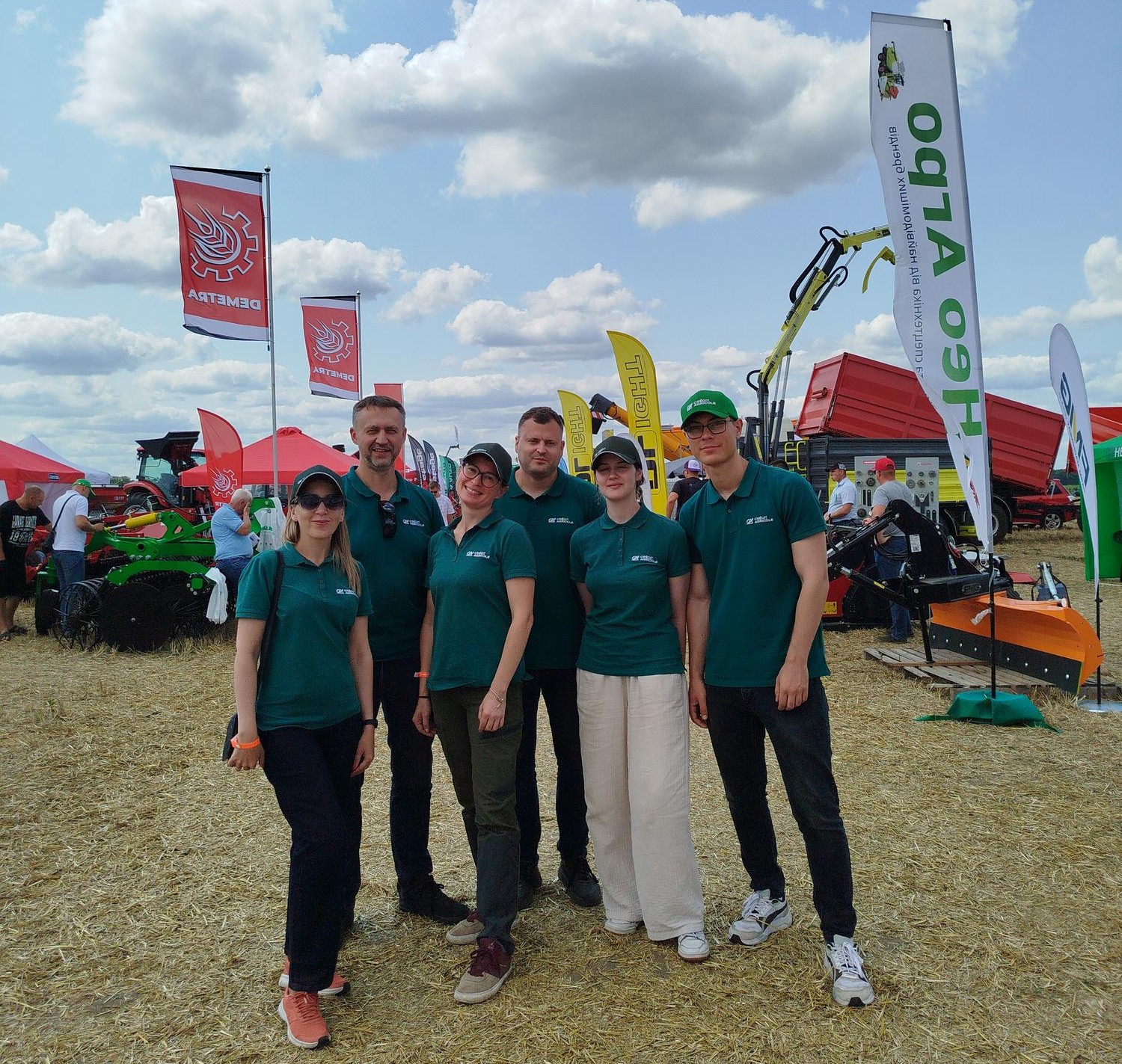
Credit Agricole Bank's Agribusiness Support and ESG Department Team
Let's see how the bank implements ESG practices in agribusiness and helps its customers become sustainable
For Credit Agricole, agribusiness is an important lending segment, so creating and developing partnerships in this area to achieve carbon neutrality is one of the priorities. To this end, the bank is creating an ecosystem of support for agrarian customers, which currently number over 2,700, and combining their financing with profound expertise in the field of agribusiness and sustainability, offering over 70 partner programs.
Today, the bank's agricultural portfolio includes financing seasonal needs, machinery and equipment upgrades, energy efficiency projects, and climate change adaptation. In particular, the bank and partners have implemented the Agriculture Climate Adaptation (ACA) program to provide Ukrainian farmers with sustainable solutions, financial support, and opportunities in the carbon credit market.
It includes expert advice on sustainable production, land selection for improved production efficiency and the development of a detailed plan of transition to sustainable practices. Participants also receive tailored financial solutions from Credit Agricole, which are fully integrated into the transition strategy.
“Agriculture is part of our DNA, since the history of the international Group began 140 years ago as a bank for farmers, and in Ukraine we have been a strategic partner for agricultural companies for over 15 years. Our mission is to be not just a leader in banking services, but also to change and transform the market. Sustainable development is organically built into our strategy. We began to focus attention on it 5-6 years ago, communicating with customers about the technologies they use and the challenges due to climate change”, — notes Nataliia Porvina, Head of Agribusiness Support Department and ESG of Credit Agricole
Nataliia Porvina, Head of Agribusiness Support Department and ESG of Credit Agricole
To boost its expertise in the industry, the bank has its in-house team of agricultural experts. These are professionals with specialized agronomic and veterinary education who spend a significant part of their working time directly in the fields. Together with ESG experts, they developed a specialized questionnaire for farmers, adapted to the realities of crop production, livestock farming and processing.
In addition, to broaden its expertise, in 2018 the bank created a unique specialized training program “AgriSchool”, the participants of which — bank employees — work with real cases and visit the production facilities of agrarian customers — international, medium-sized corporate and small businesses. This is an opportunity to “live the life of an agrarian”: from sowing to harvesting, in order to be closer to the customer, understand their needs and speak the same language with the agrarian customer. Over 7 years, nearly 100 graduates have completed the program.
“We invest heavily in training of our employees in order not only to understand our customers, but also to share knowledge and offer comprehensive financial solutions taking into account the specifics of agriculture and ESG practices. Sustainable development in the agrarian sector is an integral mechanism for banks. Running an agribusiness without sustainable practices is a big risk, as is financing such a business”, — notes Ihor Hurzhii, head of Agri-expertise Division of Credit Agricole.
According to Ihor Hurzhii, based on the customers' responses to the questionnaire, their individual rating is compiled, which the bank uses for internal analysis of ESG risks and quality management of the loan portfolio. The rating is used for two practical purposes: the first is an internal assessment of the customer's risk exposure according to environmental, social and governance factors. The second is the creation of a list of specific actions that can mitigate these risks, because it is important to immediately offer solutions, and not just highlight the problem. In practice, these may be recommendations for developing procedures for dealing with complaints from local communities, approaches to occupational safety, personnel management or environmental processes. Each of these recommendations is of an applied nature and is aimed at increasing business predictability.
Ihor Hurzhii, head of Agri-expertise Division of Credit Agricole
Such steps not only minimize risks for the lender, but also improve reputation and create added value for the business. At the same time, it is fundamental for Credit Agricole that the identification of risks is not an automatic deal breaker for financing.
“If a company recognizes problem areas and is ready to work on them, this is considered a positive signal. After all, in 2026 we are working with the agricultural sector without the assumption that war is a temporary factor, and in the abbreviation ESG we should not omit the S – social. It was based on this logic, in particular, that we decided to finance a small farmer in a dangerous region near Kharkiv, despite weak financial indicators. The decisive factor was his credit discipline and willingness to fulfill obligations even after the loss of equipment due to the war”, - notes Nataliia Porvina, Head of Agribusiness Support Department and ESG of Credit Agricole
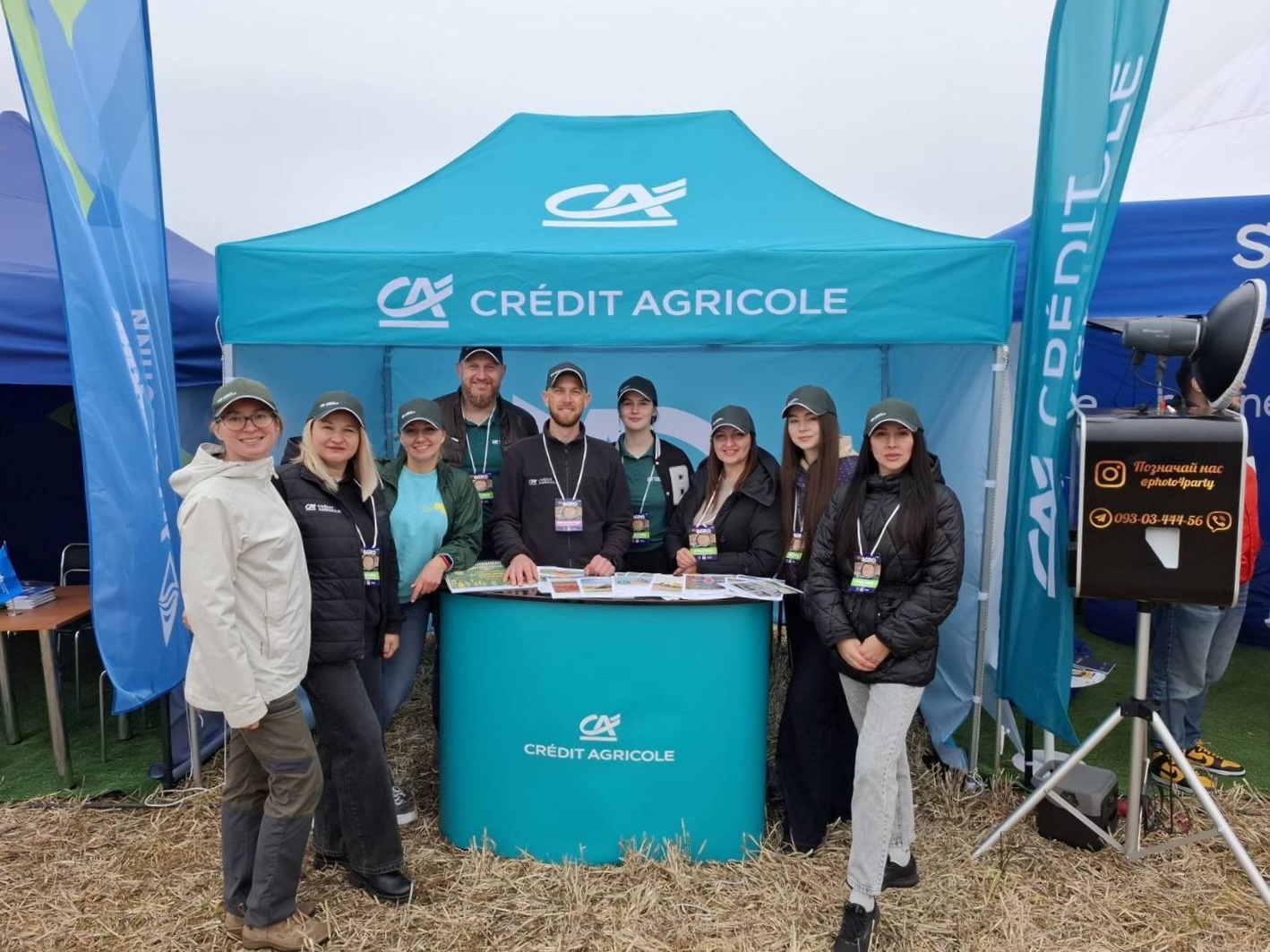
Credit Agricole Bank's Agribusiness Support and ESG Department Team
One of the important projects of 2025 for Credit Agricole was the already mentioned Agriculture Climate Adaptation Program, which was launched jointly with eAgronom, an agro-tech company specializing in climate solutions, and Agrosem, which offers farmers comprehensive solutions – from seeds and fertilizers to machinery and precision farming innovations. The initiative offers Ukrainian agrarian companies sustainable solutions, financial support and opportunities to make money on the carbon credits market. In fact, this tool helps farmers convert sustainability into money.
Ihor Hurzhii explains that the program enables customers to earn additional income through carbon offset certificates. The amount depends on the list of changes the company implements. In addition to receiving direct income, participation in the program helps stabilize yields and reduce production costs.
“The greatest benefit is gained by companies that switch from classic plowing to no-tillage cultivation [without turning the soil layer] and grow green manure crops. The total amount of payments for such certificates can be so significant that it can even cover the cost of certain agricultural equipment. In this ecosystem, the bank acts as a financial partner that covers the needs identified within the program”, - explains Ihor Hurzhii, head of Agri-expertise Division of Credit Agricole.
The Bank has already invited 15 agrarian producers to participate in this program. As a result, about 1.5 thousand hectares of the land bank have been included in the initiative and are being cultivated in accordance with the requirements of sustainable development. The demand for this solution confirms that farmers in Ukraine understand that adaptation to climate change in the future allows achieving better stability and profitability.
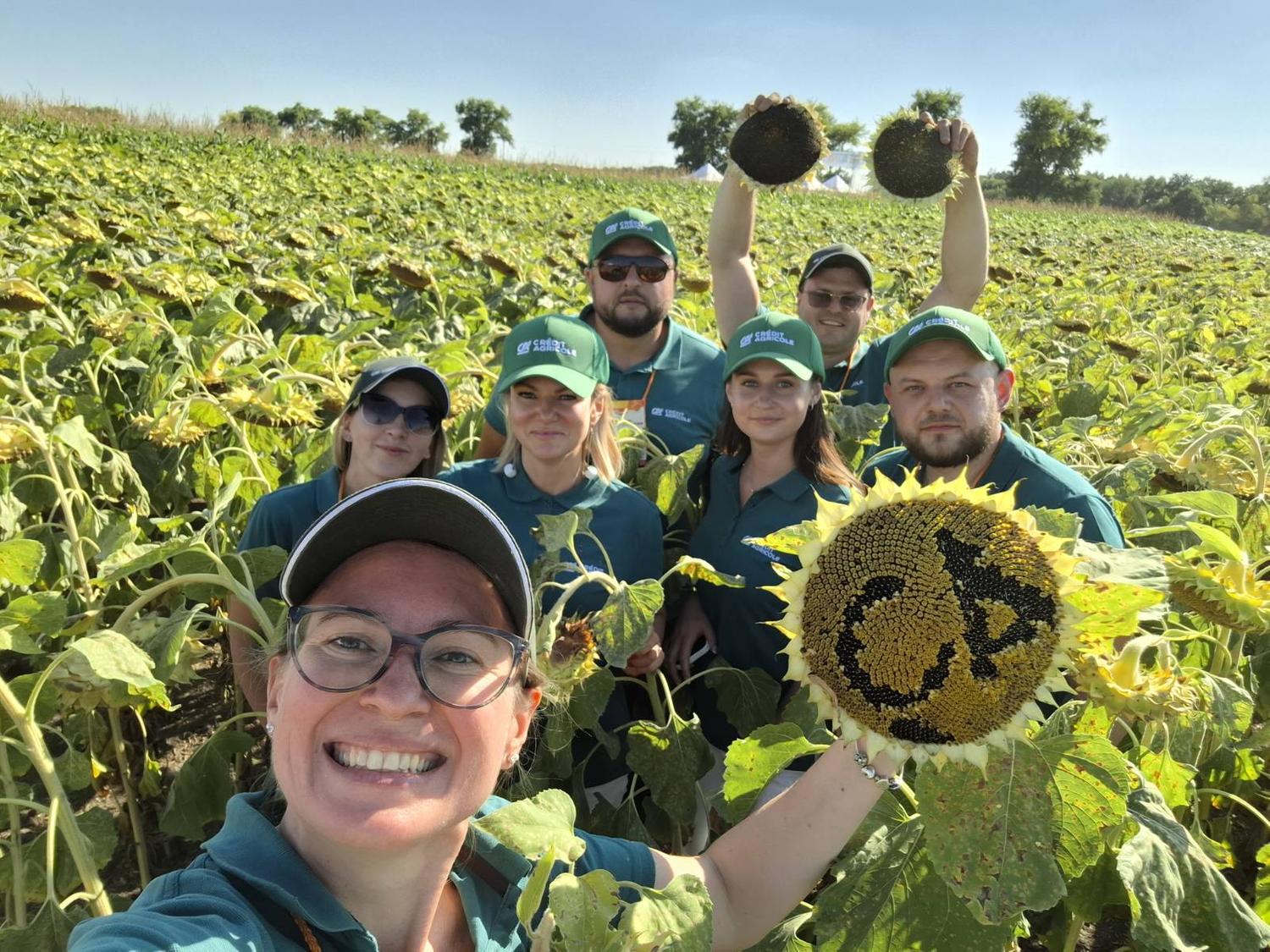
Credit Agricole Bank's Agribusiness Support and ESG Department Team
How Credit Agricole invests in the nation’s recovery
The social component (S in ESG) in Credit Agricole’s strategy is implemented through the corporate social responsibility program We Care!, which will turn 10 years old this spring. What started as a volunteer initiative with a budget of USD 10,000, is now a strategic project with an average annual budget of over USD 1.3 million.
The We Care! program covers the following key areas:
Charity. Credit Agricole has allocated over UAH 190 million to help society since the beginning of the full-scale invasion. This includes cooperation with charitable foundations, the purchase of medical equipment for hospitals, repairs and financial support for the perinatal center.
Employee care. Since the beginning of the full-scale war, the bank has allocated over UAH 200 million to the well-being of employees: improved medical and life insurance, assistance in difficult circumstances, support for families, as well as mobilized employees and veterans, rehabilitation in a sanatorium, additional motivation systems.
Volunteering. The bank has been promoting regular donor days for employees for the past 8 years at the head office and in the regions, participating in charity runs, and encouraging a culture of volunteering.
Environmental initiatives. The bank leads by example implementing the best global practices: it has solar panels, electric cars and electric scooters, conducts energy audits and introduces new energy-efficient technologies in construction. As part of the “green office” project, employees use paper made of 100% recycled raw materials and sulfate-free detergents. The bank’s team supports the “Earth Hour” campaign every year and plants trees.
The financing of these and other initiatives is the result of the joint efforts of the entire Group: 40% of the funds are provided by Credit Agricole Group Foundation, 30% by regional banks in France, and another 30% is allocated by Credit Agricole Ukraine.
The largest project last year was the support of the Kyiv Regional Perinatal Center, which reached UAH 50 million. The institution's priority is to provide medical care to high obstetric and perinatal risk women.
“This initiative means a lot to us. It is the most wide-reaching charity project in Ukraine in Credit Agricole’s history. It is about saving children’s lives. It is also a testament to solidarity of the international Credit Agricole Group with Ukrainians and proof that support knows no bounds”, — commented Carlos de Cordoue, CEO of Credit Agricole Bank in Ukraine.
Dear visitor! Our website may not display correctly in Internet Explorer. In order to access all the functionality and content of the website, please use the Google Chrome / Mozilla Firefox / Safari or other web browser, apart the Internet Explorer. Thank you for being with us!